Nobody plans to look out of place. You spend weeks researching your Europe itinerary, booking the right hotels, planning the right routes. And then you show up wearing a branded hoodie, carrying a crossbody bag, and shuffling across Roman cobblestones in foam flip-flops. By 10 AM, every local within a three-block radius knows exactly where you are from.
Dressing for Europe in summer is less about fashion and more about reading the room. The room, in this case, being an entire continent with centuries of style culture baked into how people dress for a Tuesday. The mistakes tourists make in European summers are almost never about taste. They are about not knowing what the heat, the terrain, and the culture actually demand from your wardrobe.
This guide walks through the most common clothing mistakes, what to wear in Europe in summer instead, and how to pack a bag that works for a week in Paris and a weekend in Santorini without looking like you raided an airport gift shop.
Wearing Flip-Flops Everywhere
Flip-flops are fine at the beach. They have no business on a walking tour through Athens or a day trip around Prague. The streets in most European cities are narrow, uneven, and genuinely punishing on open footwear. You will spend a lot of time walking, often 15,000 to 20,000 steps a day on cobblestones.
Blisters aside, many restaurants, churches, and cultural sites in countries like Italy, France, and Spain have informal dress codes. Flip-flops are often seen as disrespectful, especially indoors.
Better option: Wear leather sandals, low-profile sneakers, or breathable walking shoes with light cushioning. Your feet will last the whole day, and you will fit right in.
Showing Up in Gym Clothes or Athletic Wear
Athleisure took over North American and Australian cities, but it never really caught on as everyday European street style. Wearing gym leggings or a sports jersey to walk through the Marais in Paris or stroll along the Ramblas in Barcelona marks you immediately.
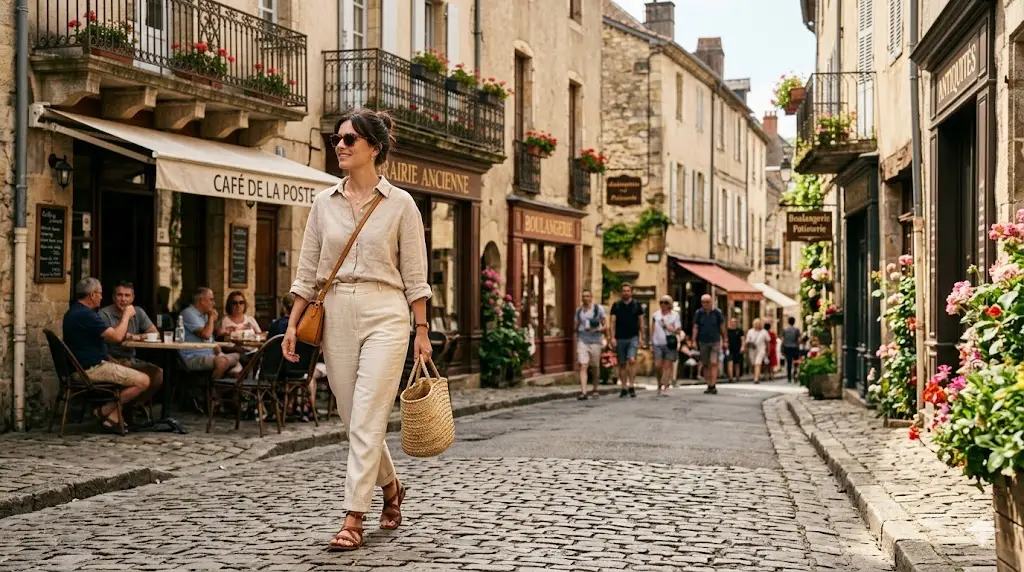
European summers tend to mix style with ease. Even casual outfits tend to look intentional. A lightweight linen shirt and slim trousers do the same job as a tracksuit in terms of comfort, but the visual result is completely different.
According to a 2023 Euromonitor report, over 68% of European fashion consumers consider everyday style a form of cultural expression. That attitude trickles into how locals view tourists who dress purely for function with zero thought for aesthetics.
Not Dressing for Churches and Religious Sites
This is one of the most common and easily avoidable mistakes when visiting countries like Italy, Spain, Portugal, and Greece. Churches, basilicas, and cathedrals often require covered shoulders and knees. Tourists who show up in tank tops and shorts get turned away at the door or handed a rental wrap.
Pack a lightweight scarf or a cardigan you can tie around your waist. Takes up almost no space and saves a lot of frustration at the entrance.
Wearing Big Logos and Branded Tourist Clothing
The large logo hoodie, the branded baseball cap, the national flag t-shirt. These are guaranteed ways to stand out for the wrong reasons. It is not just about looking like a tourist. In crowded cities like Rome, Barcelona, and Amsterdam, obvious tourist signaling also makes you a target for pickpockets.
European style tends toward subtlety. Solid colors, small prints, minimal branding. Think quality over statement. If you are looking for summer outfits for a Europe trip that actually blend in, go neutral.
Packing Heavy Fabrics in Peak Summer
Heavy denim, thick cotton, and synthetic blends are brutal in 35-degree heat. Southern Europe in July can feel like a furnace, especially in inland cities like Madrid or Valencia. Tourists who pack the same wardrobe they use at home often spend half the trip sweating through their clothes.
Linen, breathable cotton, rayon, and lightweight modal are your best friends for European summer travel. They handle heat, pack small, and dry fast after a rinse in the hotel sink.
If you are still building your packing list from scratch, this guide on travel outfits that blend comfort and class covers exactly what to bring without overpacking.
Overpacking Outfits Instead of Mixing and Matching
A separate outfit for every single day is a classic tourist mindset. You end up with a 25kg suitcase, pay baggage fees, and still feel like you have nothing to wear.
Europeans tend to build capsule wardrobes for travel. A few neutral pieces that mix and match across multiple days. Two pairs of trousers, three tops, one versatile jacket. Done. You can wash items quickly and rewear without looking repetitive.
Choosing the right gear before you travel makes a real difference. This breakdown on how to choose the right camping and travel gear is worth reading if you are planning longer trips through multiple countries.
Skipping Layers for Evenings
Summer days in Europe are hot. Summer evenings can drop fast, especially in cities close to the coast or at altitude. Tourists who go out for dinner in just a tank top often end up cold by 9 PM in places like Lisbon, Nice, or Edinburgh.
A lightweight jacket or a loose long-sleeve layer solves this completely. It also doubles as your church-entry cover-up during the day. One smart piece doing multiple jobs is how you dress in Europe without looking like a tourist who over-prepared.
Ignoring Local Fashion Cues Entirely
You do not need to dress like a local to the point of confusion. But paying attention to how people around you dress gives you useful signals. In Copenhagen, minimalism rules. In Milan, everything is a little more polished. In Lisbon, there is a relaxed-but-put-together quality to everyday outfits.
Spending 20 minutes people-watching at a local cafe before you go shopping or choose your outfit for the day is genuinely useful. It costs nothing and completely changes how you carry yourself through the city.
Frequently Asked Questions
What should tourists wear in Europe in summer?
Lightweight, breathable fabrics like linen and cotton work best. Stick to neutral tones, minimal logos, and versatile pieces that layer easily. Comfortable walking shoes are essential, and a light scarf or cardigan covers you for churches and cooler evenings.
How do I not look like a tourist in Europe?
Avoid athletic wear, oversized branded clothing, and flip-flops in city settings. Choose subtle, well-fitted pieces and pay attention to local style cues. Looking polished but relaxed rather than purely functional helps you blend in naturally.
Are shorts okay in Europe in summer?
Yes, in most casual settings. However, shorts are not appropriate for churches, some fine dining restaurants, or formal cultural sites. Opt for tailored or linen shorts rather than athletic or cargo styles when exploring cities.
What shoes should I wear in Europe in summer?
Leather sandals, low-profile walking sneakers, or supportive loafers work well on cobblestone streets. Avoid flip-flops and high heels for full-day sightseeing. Comfort and grip matter more than style when you are covering serious ground on foot.
How do I pack light for a European summer trip?
Build around five to seven neutral, mix-and-match pieces. Pack fabrics that dry fast and resist wrinkles. Choose one pair of versatile shoes that work day to night. Leave room in your bag and buy one or two local items instead of packing everything upfront.
Plan Your Europe Wardrobe the Right Way
Getting your European summer outfits right is not complicated. It mostly comes down to fabric, fit, and a bit of local awareness. Ditch the gym clothes, leave the flip-flops for the beach, and build a small capsule wardrobe that does more with less.
If you want more practical guidance before your trip, explore these reads:
- Travel outfits that blend comfort and class
- How to choose the right gear for longer travel
Pack smart, dress well, and enjoy the trip.