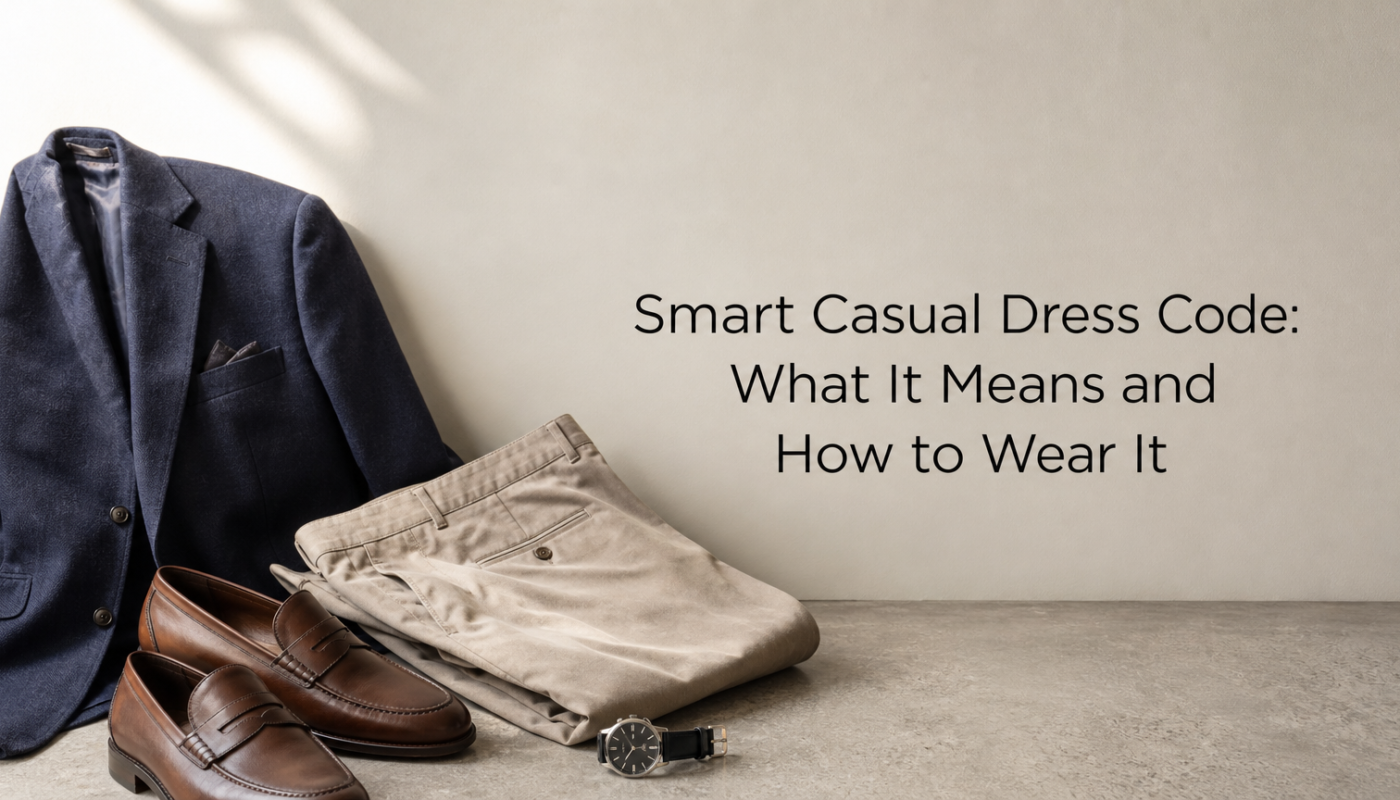
You got the invite, read the words "smart casual," and now you’re staring at your closet wondering if jeans count. You’re not alone. The smart casual dress code is one of the most misunderstood terms in fashion because it sits right in the gray zone between office wear and weekend clothes, and no two invitations seem to define it the same way.
Here’s the short answer: smart casual means polished, put-together pieces that skip the stiffness of formal wear but still show effort. Think tailored separates paired with relaxed, comfortable staples, not jeans and a t-shirt, but not a full suit either. It’s a balance between structure and ease, and once you see a few real outfit examples, the confusion clears up fast.
In this guide, we’ll break down exactly what smart casual means for women and men, walk through outfit formulas you can copy for the office, dinner, or a wedding, and flag the common mistakes that push an outfit too casual or too dressy. By the end, you’ll never second-guess an invitation again.
Why the smart casual code dress matters
Hosts and hiring managers reach for smart casual dress code language because it solves a real problem: they want guests or employees to look put-together without forcing them into a suit and tie. A wedding on a vineyard, a client dinner, a Friday office happy hour, none of these call for black-tie formality, but a hoodie and sneakers would feel disrespectful. Smart casual gives everyone a shared vocabulary for dressing with intention while still keeping things comfortable enough to actually enjoy the event.
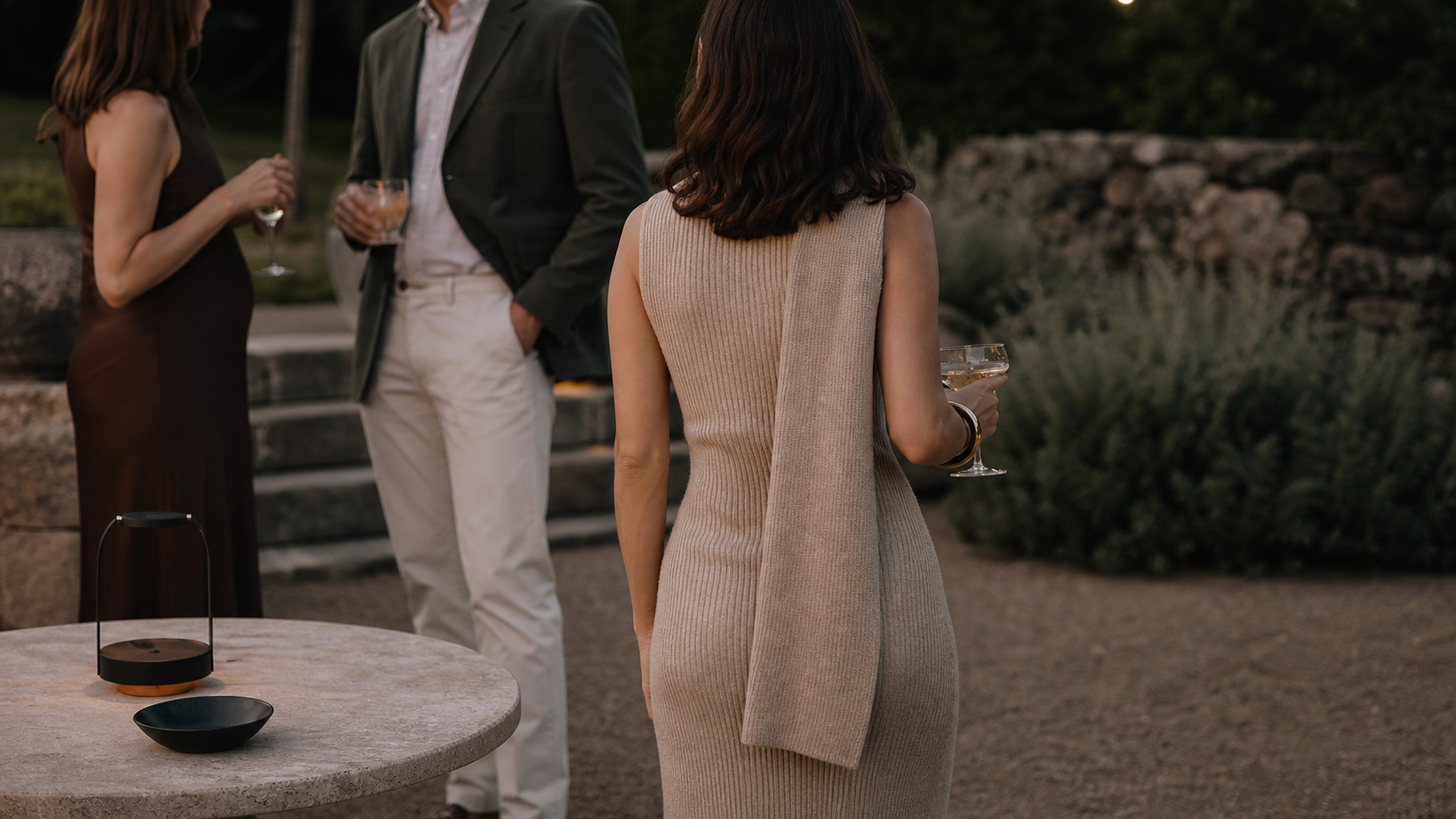
Understanding what is dress code smart casual matters because misreading it has real consequences. Show up underdressed at a business dinner and you signal that you didn’t take the invitation seriously. Overdress at a casual gathering and you make the host feel like they set the wrong tone. Neither outcome is a fashion crime, but both create small social friction that’s easy to avoid once you know the rules. Recruiters and HR professionals often note that appearance still shapes first impressions in interviews and client meetings, which is why guidance from sources like the U.S. Department of Labor’s career readiness resources still points to appropriate dress as part of workplace preparation.
Restaurants, corporate offices, and event venues have all leaned on this term more heavily over the past decade as strict formal dress codes have relaxed. That shift means the definition of smart casual dress code keeps evolving, but the core idea stays consistent: elevated basics, not costume-level formality.
Smart casual isn’t a loophole to wear whatever’s clean, it’s a signal that you respect the room without needing a suit to prove it.
How smart casual compares to other dress codes
Seeing the codes side by side makes the differences click faster than any written explanation.
| Dress Code | Typical Pieces | Footwear | Effort Level |
|---|---|---|---|
| Casual | Jeans, t-shirts, sneakers | Sneakers, sandals | Low |
| Smart Casual | Chinos, blouses, blazers, knit dresses | Loafers, low heels, clean sneakers | Moderate |
| Business Casual | Slacks, button-downs, cardigans | Flats, oxfords | Moderate-High |
| Formal | Suits, gowns, cocktail dresses | Dress shoes, heels | High |
That table also explains why so many people search for the casual smart dress code separately from business casual. The two overlap, but smart casual leaves more room for texture, color, and personal style, while business casual leans conservative and office-specific.
Think of smart casual as the dress code equivalent of a firm handshake: confident, appropriate, and never over-the-top. Once you internalize that comparison, building an actual outfit becomes a lot less stressful, which is exactly what we’ll walk through next.
How to build a smart casual outfit

Building a smart casual outfit comes down to one formula: pair one structured piece with one relaxed piece, then add a finishing detail that shows you tried. Structure without stiffness is the goal, and once you memorize this pattern, you can mix and match almost anything in your closet and still land in the right zone.
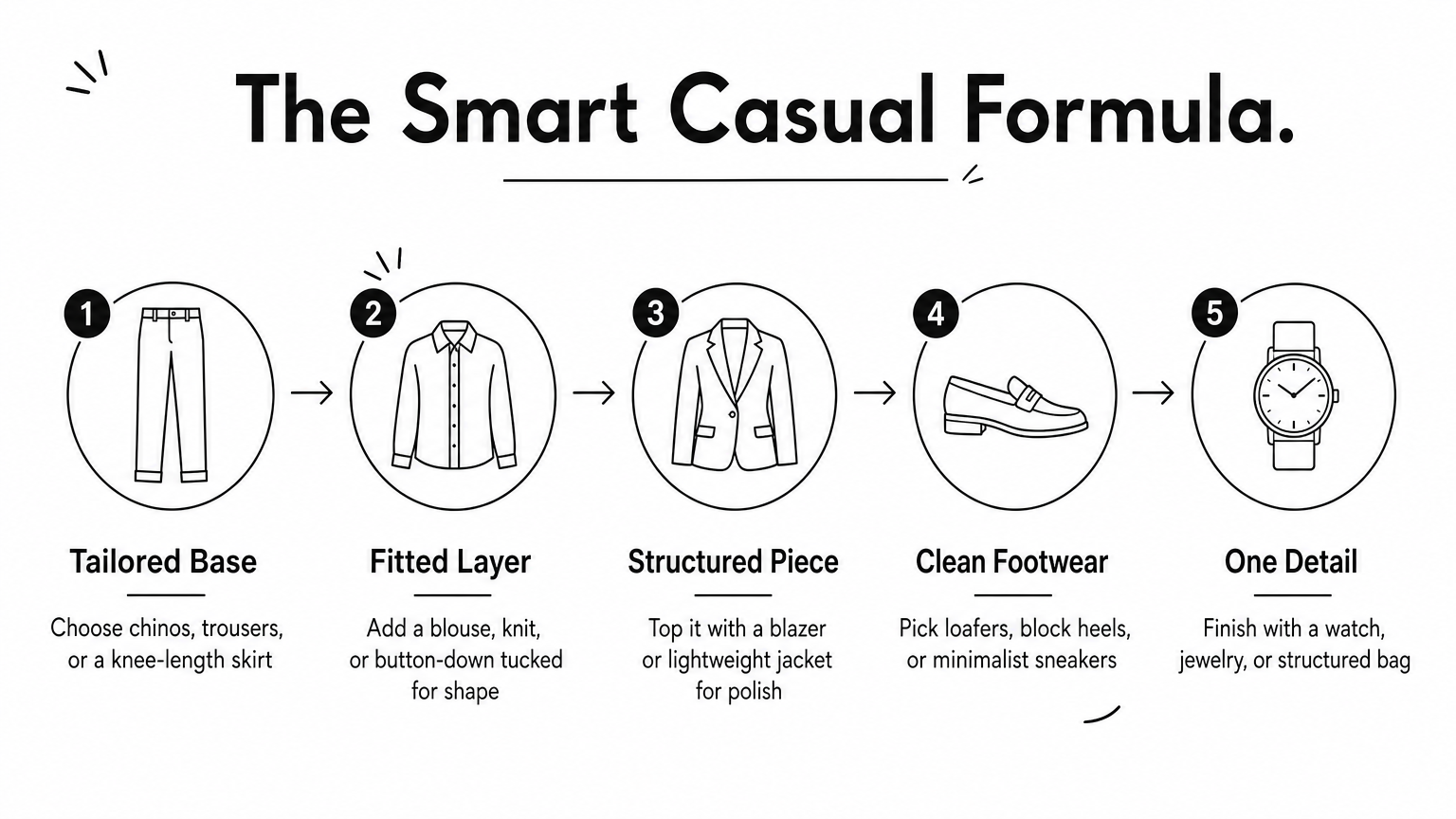
The formula that always works
Start with a base layer, add contrast, then finish with intention. Here’s how that breaks down in practice:
- Bottom half: chinos, tailored trousers, or a knee-length skirt, never sweatpants or distressed denim
- Top half: a blouse, a fitted knit, or a button-down, tucked or half-tucked for shape
- Layer: a blazer, structured cardigan, or lightweight jacket that adds polish
- Shoes: loafers, block heels, or clean minimalist sneakers, skip anything athletic-looking
- One accessory: a watch, simple jewelry, or a structured bag that pulls the look together
That five-piece checklist works whether you’re dressing for a Tuesday client meeting or a Saturday dinner reservation, and it’s the fastest way to answer code dress smart casual questions without overthinking every item.
If one piece in your outfit is dressed up, one is relaxed, and everything fits well, you’ve nailed smart casual.
Fabric and fit matter more than labels
Often people assume smart casual is about specific brands or price points, but it’s really about fabric quality and fit. A well-fitted cotton chino beats an ill-fitting designer trouser every time, and a crisp linen shirt reads more polished than a wrinkled silk one. Fit is what separates "put-together" from "just wearing clothes," so hem your pants, tailor your blazers, and avoid anything baggy or overly tight.
Granted, colors and textures give you room to express personal style within the formula. Neutral tones like navy, camel, and white form a reliable base, while a patterned scarf or textured knit adds character without breaking the code. For more outfit inspiration organized by season, see what’s coming in fall fashion trends for 2026 for real combinations you can copy directly.
Smart casual dress code for women
Women often get less guidance than men on this dress code because the options are wider, and that freedom can feel like a trap. The smart casual dress code for women still follows the same formula: one polished piece, one relaxed piece, and shoes that don’t scream gym. The good news is that dresses simplify the equation instantly, since a single well-chosen piece can do the work of a top and bottom combined.
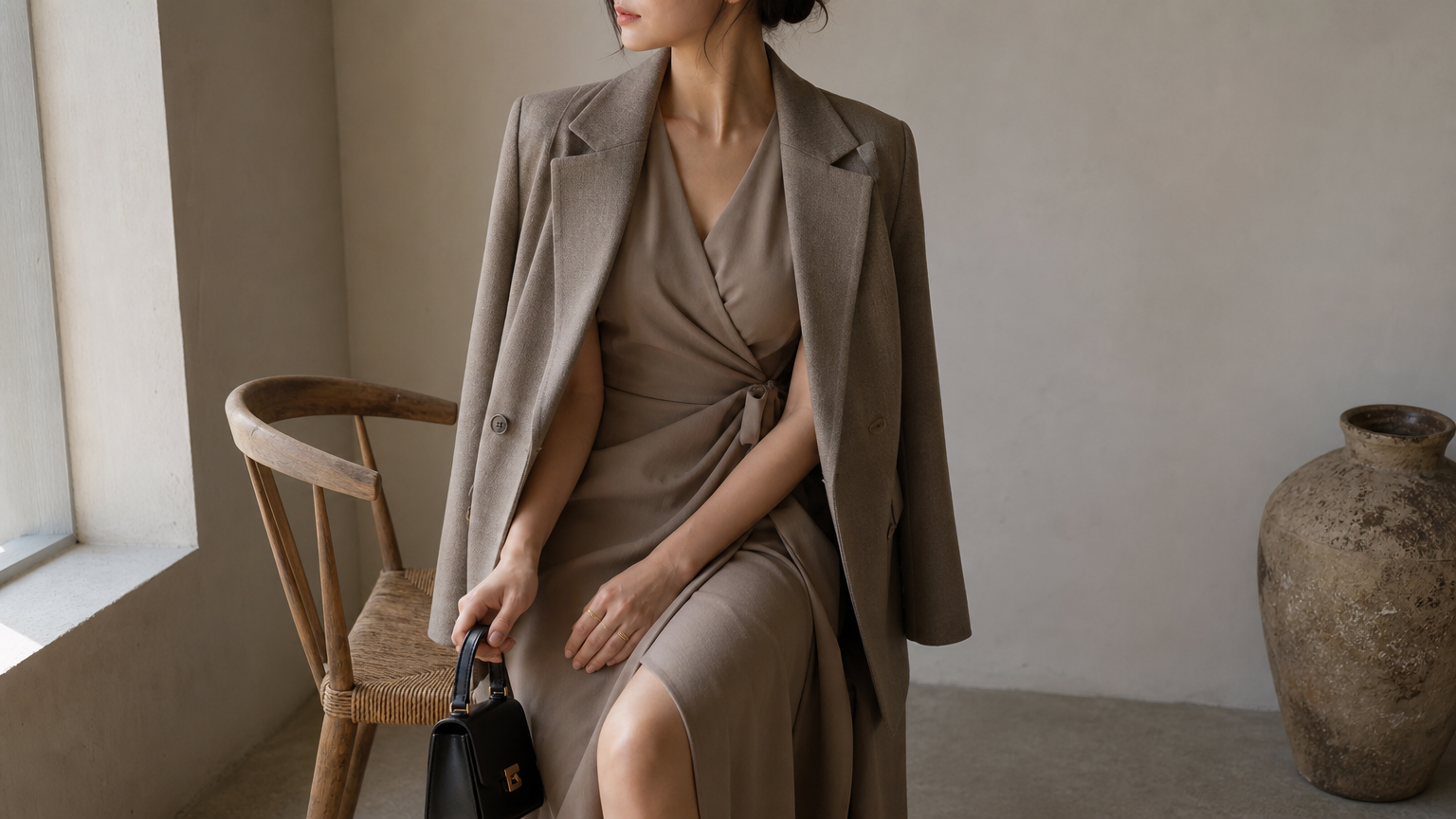
A knee-length dress with a blazer over it solves the smart casual dress code women office question in under thirty seconds.
Building blocks for the ladies’ version
Here’s what typically works when someone asks what is smart casual dress code for women in a work or event setting:
- Dresses: knee-length shift, wrap, or knit dresses in solid colors or subtle prints
- Separates: tailored trousers or a midi skirt paired with a tucked blouse
- Layers: a structured blazer, cardigan, or trench for added polish
- Shoes: block heels, loafers, or pointed flats, avoiding flip-flops or heavy sneakers
- Accessories: a structured handbag and minimal jewelry that don’t compete with the outfit
That list covers most searches for smart casual dress code women dresses, since dresses remain the fastest route to looking finished without assembling separate pieces, and a simple black dress is endlessly adaptable once you see how to style one for different occasions.
Context changes the details even when the formula stays fixed. A smart casual dress code women work environment usually calls for longer hemlines, closed-toe shoes, and fewer bold prints, while a dinner or wedding leaves room for color, texture, statement jewelry, and longer hemlines that raise the question of what color shoes to wear with a maxi dress. If you’re unsure which direction to lean, dress slightly more conservative for office settings and slightly more expressive for evening ones. Ladies navigating a smart casual dress code shouldn’t feel boxed in by rigid rules, since the category exists precisely to allow personal style within a professional frame, not to eliminate it entirely.
What to avoid when dressing smart casual
Mistakes in this dress code usually come from overcorrecting in one direction. People either panic and dress too casually, showing up in jeans and sneakers, or they overcompensate and land in full business formal, which reads as stiff and out of place. The smart casual dress code definition only works when you avoid both extremes, so knowing the specific pitfalls saves you from a wardrobe scramble ten minutes before you walk out the door.
The five most common slip-ups
Quick reference for what pulls an outfit out of the smart casual zone:
- Athletic wear: sneakers built for the gym, joggers, or performance fabrics signal weekend errand, not polished effort
- Distressed denim: ripped jeans or heavy fading skew too casual, even when paired with a blazer
- Full formalwear: tuxedos, floor-length gowns, or three-piece suits overshoot the mark and make you look like you wandered in from a different event
- Wrinkled or ill-fitting pieces: a blazer that bunches at the shoulders undoes an otherwise correct outfit
- Flip-flops or beach sandals: these read as too relaxed no matter what’s on top
Get one piece wrong, like sneakers with a suit or heels with sweatpants, and the whole outfit reads as a mistake instead of a style choice.
Overthinking versus underthinking
Overdressing trips people up just as often as underdressing does. Showing up in a full suit to a smart casual dinner can feel just as out of place as arriving in gym clothes, since it signals you didn’t read the room. Realistically, the safest move when you’re stuck between two options is to choose the slightly more relaxed one and add one polished detail, like a blazer or structured bag, to bring it back into balance. Sticking to fitted, clean pieces in neutral or muted colors keeps you firmly in the smart casual lane without drifting toward either extreme.
Smart casual outfit ideas for every occasion
Seeing the formula applied to real situations makes it stick faster than any rule list. Below are ready-to-copy combinations for the occasions people ask about most, so you can skip the guesswork and get dressed with confidence.
| Occasion | Women’s Outfit | Men’s Outfit |
|---|---|---|
| Office day | Knee-length dress + blazer + loafers | Chinos + button-down + loafers |
| Client dinner | Midi skirt + tucked blouse + block heels | Dark trousers + knit polo + blazer |
| Wedding guest | Wrap dress + statement earrings + heels | Linen suit + open-collar shirt |
| Weekend brunch | Wide-leg trousers + fitted top + flats | Chinos + Oxford shirt + clean sneakers |
| Travel day | Knit dress + cardigan + slip-on flats | Joggers-adjacent chinos + polo + sneakers |
Office and client meetings
Mornings call for pieces that survive back-to-back meetings without wrinkling by noon. A structured blazer over a knit dress or tucked blouse handles that pressure, and swapping stilettos for block heels keeps you comfortable through a full workday. For men, chinos with a tucked button-down and loafers hit the same mark without ever tipping into full business formal.
The best smart casual outfits look effortless precisely because every piece was chosen on purpose.
Weddings and evening events
Evenings give you room to add color and shine that daytime looks skip. A wrap dress with statement earrings photographs well and moves easily on a dance floor, much like the dresses that work best for Valentine’s Day dinners, while a linen suit with an open collar reads celebratory without competing with the couple’s formalwear.
Weekend brunch and travel days
Daytime outings favor comfort first, polish second. Wide-leg trousers with a fitted top and flats let you walk city blocks without sacrificing the put-together look, and a knit dress with a cardigan works just as well through airport security as it does at a café table, which also helps you sidestep the dressing mistakes tourists make in Europe in summer.
Making smart casual work for you
Smart casual stops feeling confusing once you stop searching for a rulebook and start thinking in formulas. One structured piece, one relaxed piece, and shoes that match the effort will carry you through almost any invitation, whether it’s a Tuesday client dinner or a weekend wedding. The specific pieces will shift with the season and the occasion, but that core balance never changes.
Next time an invite lands in your inbox with those two words, you’ll already know what to reach for instead of standing in front of your closet second-guessing every hanger. Confidence in dressing comes from repetition, not perfection, so give yourself permission to experiment with the formula until it feels natural. If you want more outfit inspiration tailored to specific seasons and events, browse all of our fashion guides and make getting dressed one less thing to stress about.