You open your closet and it’s stuffed, but you still feel like you have nothing to wear. That’s the exact problem a capsule wardrobe men approach solves. Instead of chasing every trend, you pick a tight set of pieces that all work together, so getting dressed stops being a daily negotiation with yourself.
Building a men’s capsule wardrobe isn’t about owning less for the sake of it. It’s about buying fewer things that actually fit your life, then making sure every shirt, pair of pants, and jacket can pair with at least three other items you own. Do that right and a capsule wardrobe for men built around 30 to 40 pieces can cover work, weekends, and everything in between.
This guide walks you through exactly how to get there. You’ll get a practical list of minimalist wardrobe essentials men actually need, a plan for a full wardrobe overhaul without wasting money, and simple rules for mixing colors and fits so your closet finally works for you instead of against you.
What a men’s capsule wardrobe actually is
A capsule wardrobe for men is a small, curated set of clothes where every piece works with almost every other piece. Think 30 to 40 items total, including shoes and outerwear, chosen so a navy blazer pairs with three different pants and two different shirts instead of just one “special occasion” outfit. The goal isn’t a bare closet for its own sake. It’s a closet where every hanger holds something you’ll actually wear this month, not something you’re keeping for a hypothetical event that never comes.
The math that makes it work
Think of your closet in terms of combinations, not item count. Ten interchangeable pieces produce far more outfits than thirty pieces that only match one or two others.
| Pieces owned | If each item pairs with 1 other | If each item pairs with 4+ others |
|---|---|---|
| 10 | ~5 outfits | 20+ outfits |
| 30 | ~15 outfits | 60+ outfits |
A closet full of clothes that don’t match each other is really a closet full of nothing to wear.
That’s the entire logic behind a men’s capsule wardrobe: fewer items, deliberately chosen so the combinations multiply instead of dead-ending.
What it isn’t
Contrary to what social media suggests, a male capsule wardrobe doesn’t mean owning exactly 33 items, wearing only black and gray, or ditching personal style for something generic. Some guys build capsules around earth tones, others around navy and burgundy. Some keep 25 pieces, others land closer to 45. The number flexes with your climate, job, and social calendar. What stays constant is the rule that every piece has to earn its spot by matching multiple others.
Unlike a strict uniform, a well-built capsule wardrobe male version still has room for a statement watch, a bold tie, or a patterned shirt you genuinely love. Those pieces just get chosen deliberately, as accents against a reliable base, rather than accumulated at random. Once you understand that distinction, the actual process of building one gets a lot simpler, and it starts in a place most guys dread: the closet cleanout.
Step 1. Clean out your closet first
Every men’s capsule wardrobe starts with subtraction, not shopping. Before you buy a single new item, pull everything out of your closet and drawers so you can see exactly what you’re working with. Most guys own more clothes than they realize, and a good chunk of it hasn’t been worn in over a year for a reason: it doesn’t fit right, doesn’t match anything else, or you simply forgot it existed.
Sort into four piles
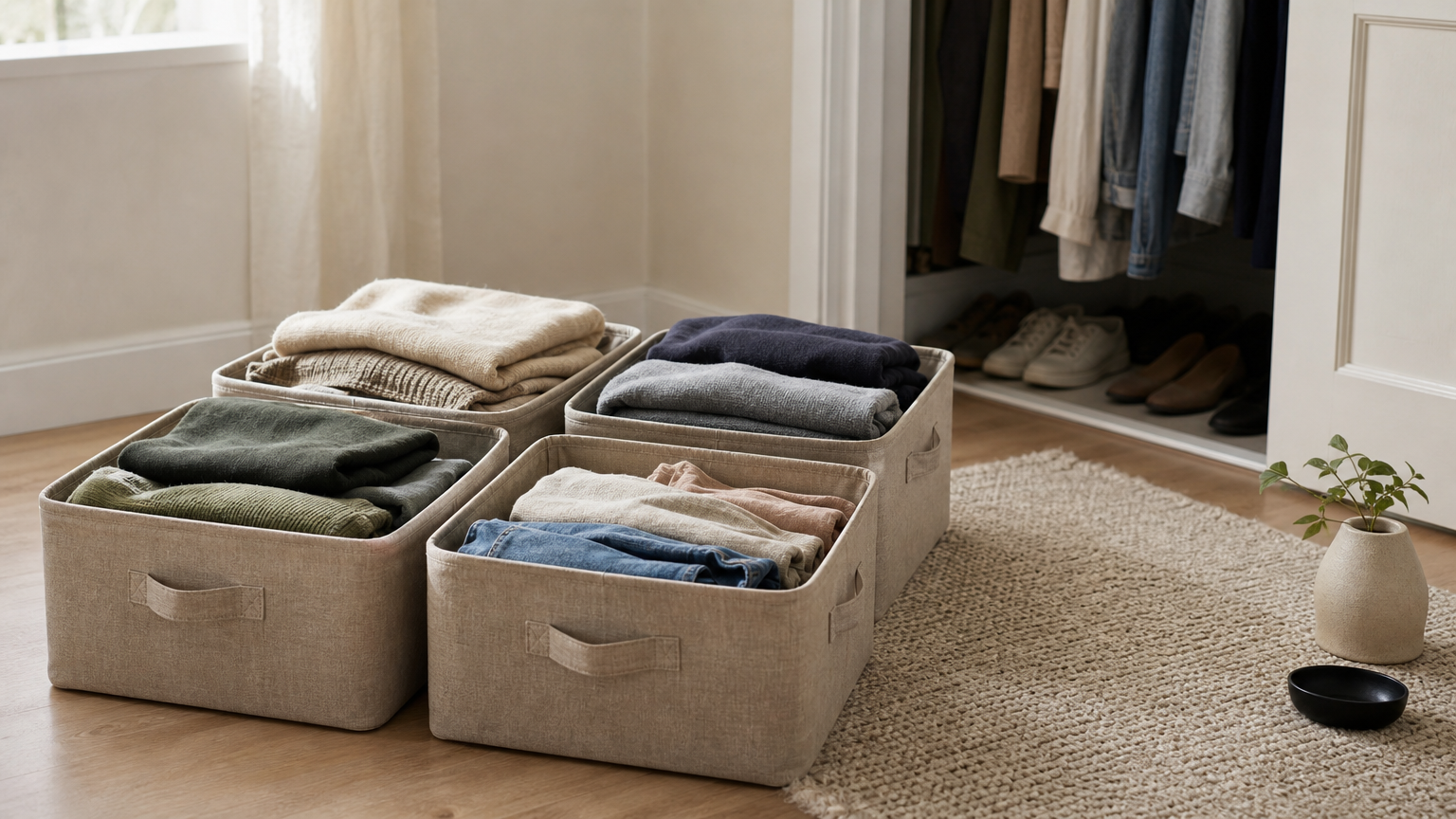
Grab a few boxes or clear a section of floor and sort every item into one of these categories:
- Keep: fits well, still in good shape, worn in the last 12 months
- Fix: good piece, needs a tailor, a button, or a wash
- Donate or sell: fits someone else better than it fits your life
- Toss: stained, torn, or beyond saving
You can’t build a working wardrobe on top of clothes you already avoid wearing.
Be honest about fit and frequency
Hold each piece up and ask two questions: does it fit your body today, and have you actually reached for it recently? Skip sentimental exceptions here. That college hoodie or the suit from a wedding three years ago isn’t doing any work in a capsule wardrobe for men, even if it has a story attached. Try on anything you’re unsure about instead of guessing, since fit changes more than most guys expect.
Once the piles are sorted, you’re left with a realistic starting inventory. That’s what you’ll build your core neutral colors around next, instead of guessing at a shopping list from scratch.
Step 2. Choose your core neutral colors
With your keep pile sorted, pick two or three core neutral colors before you buy anything else. These become the backbone of your men capsule wardrobe and dictate what every future purchase has to match. Navy, charcoal, and a warm tan or olive cover most climates and dress codes, but the exact palette matters less than the discipline of sticking to it.
Pick your base palette
Choose neutrals based on your skin tone, job, and closet, not whatever’s trending. A finance-office guy dressing for a smart casual dress code for men might lean navy, gray, and white. Someone in a casual creative job might build around olive, tan, and denim blue instead.
| Base neutral | Pairs easily with | Best for |
|---|---|---|
| Navy | Gray, white, tan | Work and smart casual |
| Charcoal | Black, burgundy, white | Cold-weather layering |
| Olive/tan | Denim, white, brown | Casual and travel |
Pick your neutrals once, and every future purchase gets easier because you already know what it has to match.
Add one or two accent colors, deliberately
Once your neutrals are locked, allow yourself one or two accent colors like burgundy, mustard, or forest green. Reserve these for a sweater, a tie, or a single statement jacket rather than spreading them across shirts and pants. Doing this keeps a minimalist wardrobe essentials men approach from turning bland, since accents give you personality without breaking the matching system. Skip prints entirely at first; a subtle check or stripe is plenty until the neutral base is solid.

Step 3. Build your essential pieces list
Now that your neutrals are set, fill in the actual essential pieces list that makes up your men’s capsule wardrobe essentials. Work top to bottom: outerwear, then layers, then bottoms, then shoes. Each item should match at least three others already on your list, or it doesn’t earn a spot.
The core list
Here’s a reliable starting point for a capsule wardrobe essentials men actually use across work and weekends, and if you’d rather order online, these capsule wardrobe pieces from Amazon cover the same ground:
| Category | Items | Quantity |
|---|---|---|
| Outerwear | Navy overcoat, denim or field jacket | 2 |
| Tops | Oxford shirts, crewneck sweaters, plain tees | 6-8 |
| Bottoms | Chinos, dark denim, one dress trouser | 3-4 |
| Shoes | Leather boots, white sneakers, brown derbies | 3 |
| Extras | Belt, watch, one blazer | 3 |
If a piece doesn’t match at least three other things you own, it doesn’t belong in the capsule.
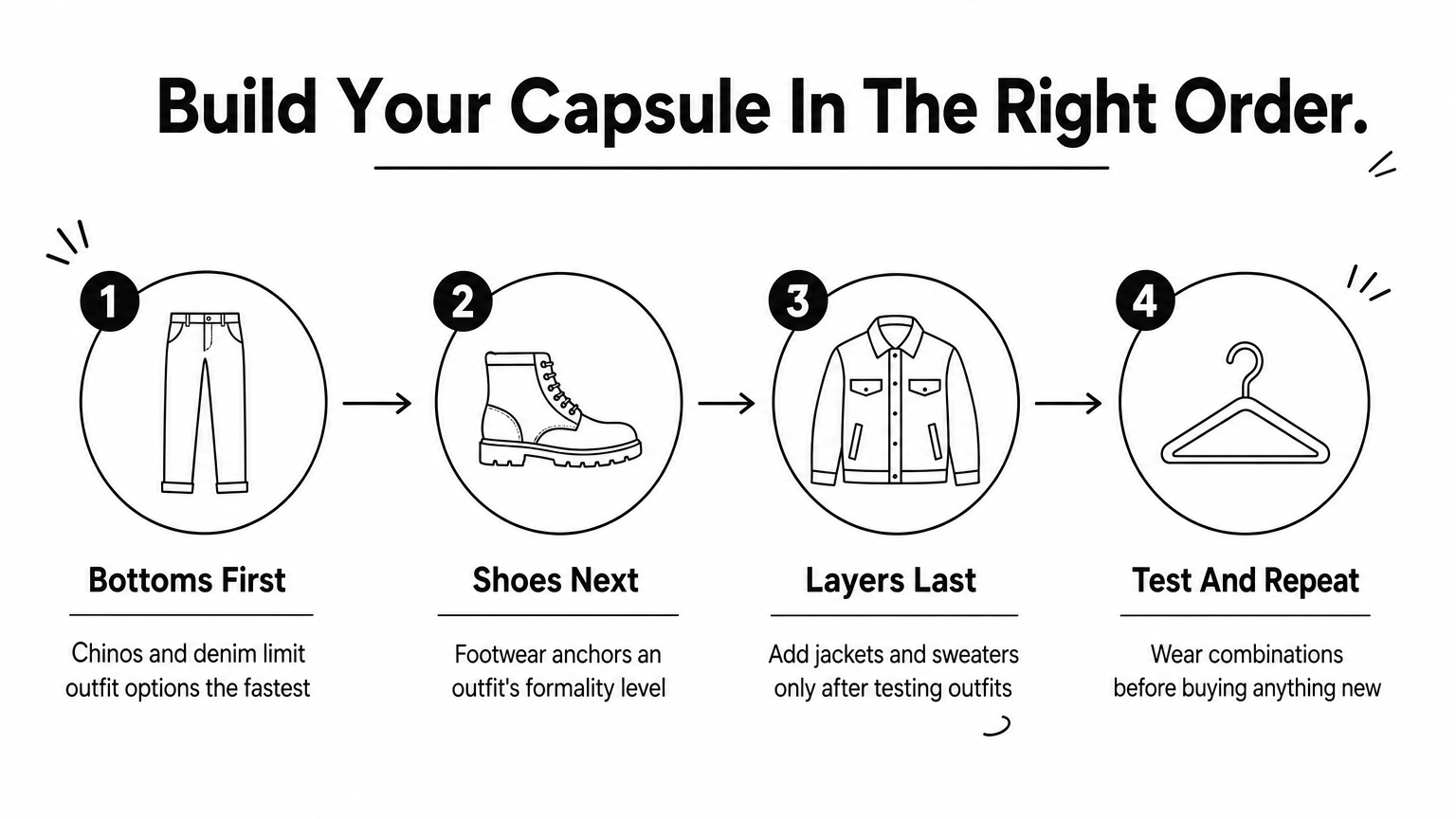
Buy in the right order
Start with bottoms, since pants are harder to match than tops and limit your options fastest. Then add shoes, since footwear anchors an outfit’s formality more than any other piece. Follow with layering pieces last, filling gaps only after you’ve tested outfits with what you already own. This sequence keeps a capsule wardrobe man builds from turning into an impulsive shopping spree, since you’ll notice real gaps instead of guessing what
Step 4. Style, adapt, and maintain your capsule
Now the real work begins: actually wearing what you’ve bought. A men’s capsule wardrobe isn’t finished once you own the pieces, it’s finished once you’ve tested them together and found combinations you reach for without thinking. Spend your first two weeks deliberately mixing items you wouldn’t normally pair, like chinos with a chambray shirt instead of your usual denim, so you learn the full range of your closet rather than falling back on three safe outfits.
Rotate instead of repeating
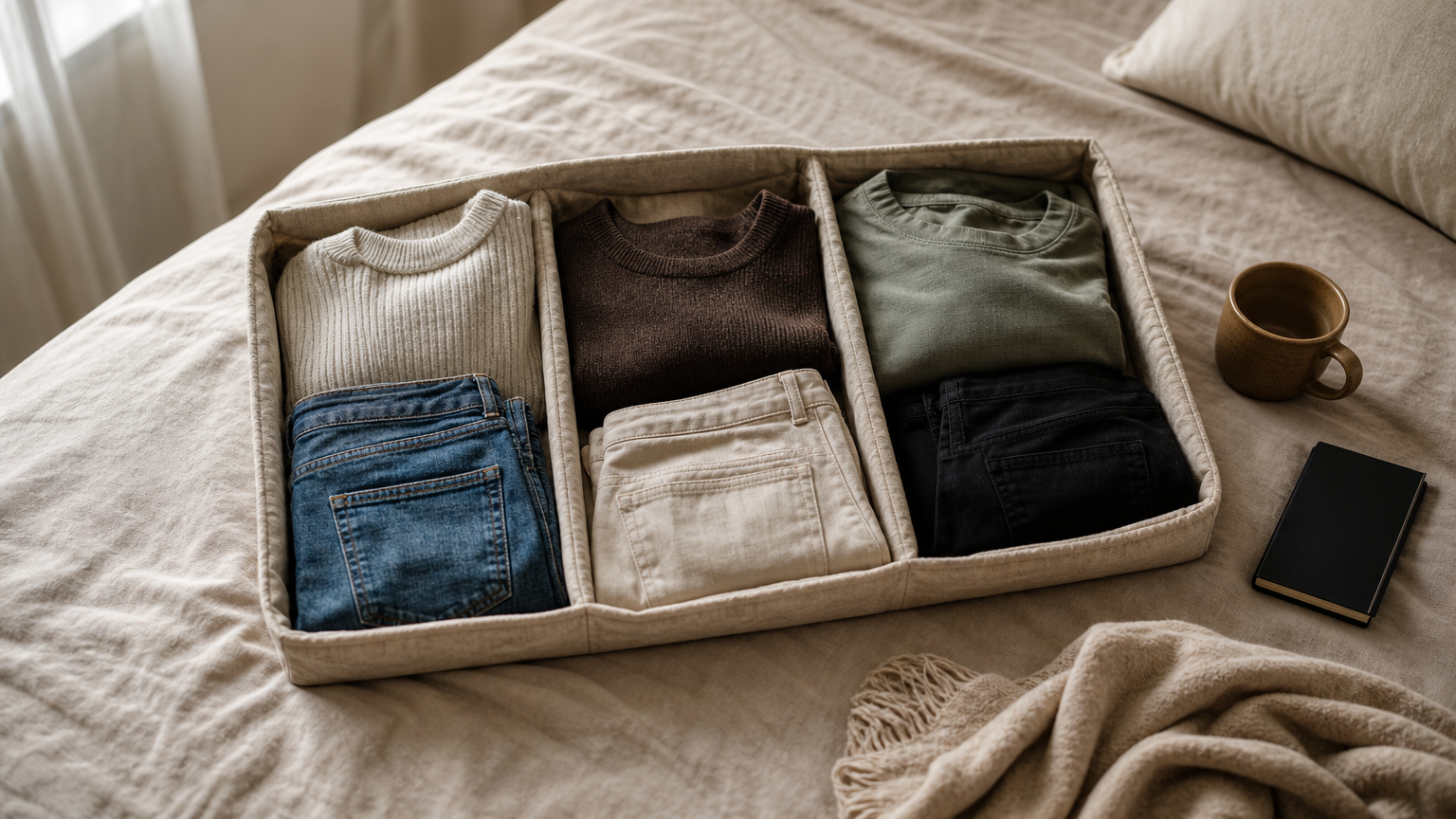
Giving every piece equal wear time keeps your capsule wardrobe for men from wearing out unevenly and reveals which items you actually reach for. Try a simple weekly rotation:
- Monday: chinos, oxford shirt, leather boots
- Wednesday: dark denim, crewneck, white sneakers
- Friday: dress trouser, blazer, derbies
A capsule only works if you actually rotate through it, not just admire it hanging in the closet.
Adjust with the seasons
Swap in a heavier overcoat or swap out linen shirts as weather shifts, but resist rebuilding the whole system twice a year. A well-planned capsule wardrobe men version needs maybe two or three seasonal swaps, not a full overhaul.
Maintain before you replace
Underline this discipline with basic upkeep: rotate shoes to let them air out, fold sweaters instead of hanging them, and mend small tears immediately. Treating your man capsule wardrobe like an investment, not disposable fast fashion, is what makes the whole system last years instead of one season.
Fewer clothes, better style
You don’t need a packed closet to look sharp every day. A men’s capsule wardrobe built on solid neutrals, a tight essentials list, and pieces that actually match each other beats a closet stuffed with clothes that only pair with themselves. Fewer options, chosen well, remove the daily guesswork and make getting dressed feel automatic instead of stressful.
Getting there takes one honest closet cleanout, a locked-in color palette, and the discipline to buy in order instead of on impulse. From there, it’s just wearing what you own and mending small problems before they become excuses to shop again. That’s the whole system behind a working capsule wardrobe for men, no complicated rules required.
If you’re ready to keep refining your style beyond the closet basics, browse more men’s fashion guides on Boulevard Insight for outfit ideas that build on the capsule you just created.