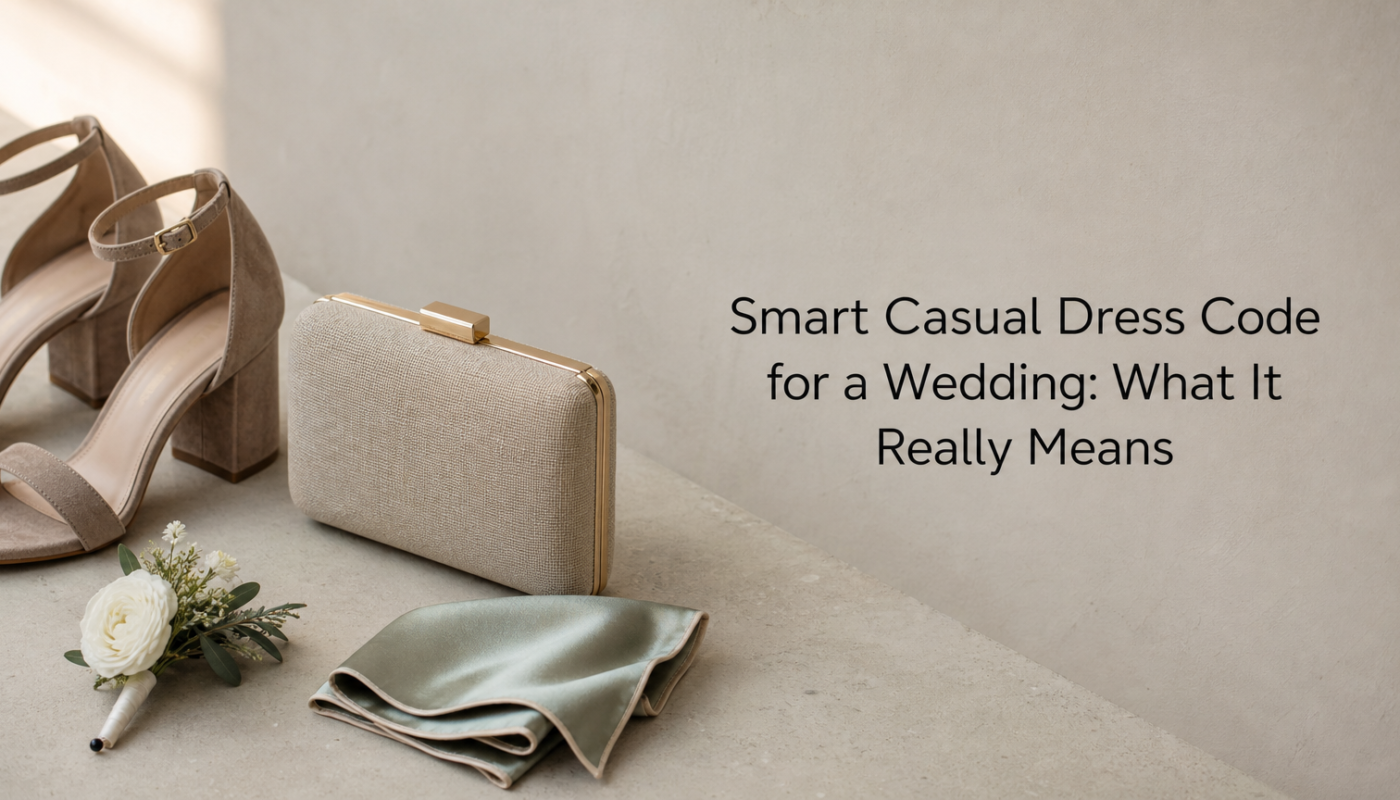
A smart casual dress code for a wedding means polished, well-fitted clothes that look more relaxed than a suit or cocktail dress. For women, that usually means a midi dress or tailored separates. For men, it means a blazer, chinos, and a collared shirt. You can skip the gown, the tuxedo, and the tie, but you should not show up in the clothes you’d wear to run errands.
Couples choose this dress code when they want guests to feel comfortable at a relaxed venue, such as a garden, a restaurant, a brewery, or a beach club. The trouble is that "smart casual" has no official rulebook. Some guests overdress in cocktail attire, and others underdress in jeans and sneakers. Both groups end up feeling out of place in the photos.
This guide explains why the dress code is so easy to misread and how to build outfits for women and men. It also covers what to leave in the closet and how to adjust for season, time of day, and venue. At Boulevard Insight, we break dress codes down into outfits you can actually put together, and this one is no exception.
Why the smart casual wedding dress code trips guests up
Smart casual is confusing because it is the one wedding dress code without a fixed uniform. Black tie means a tuxedo or a gown. Smart casual means "polished but relaxed," and two sensible people can read that two different ways. The cost of misreading it is looking out of step with the room, whether you’re in a floor-length gown among sundresses or in a graphic tee among blazers.
Where smart casual sits between casual and cocktail
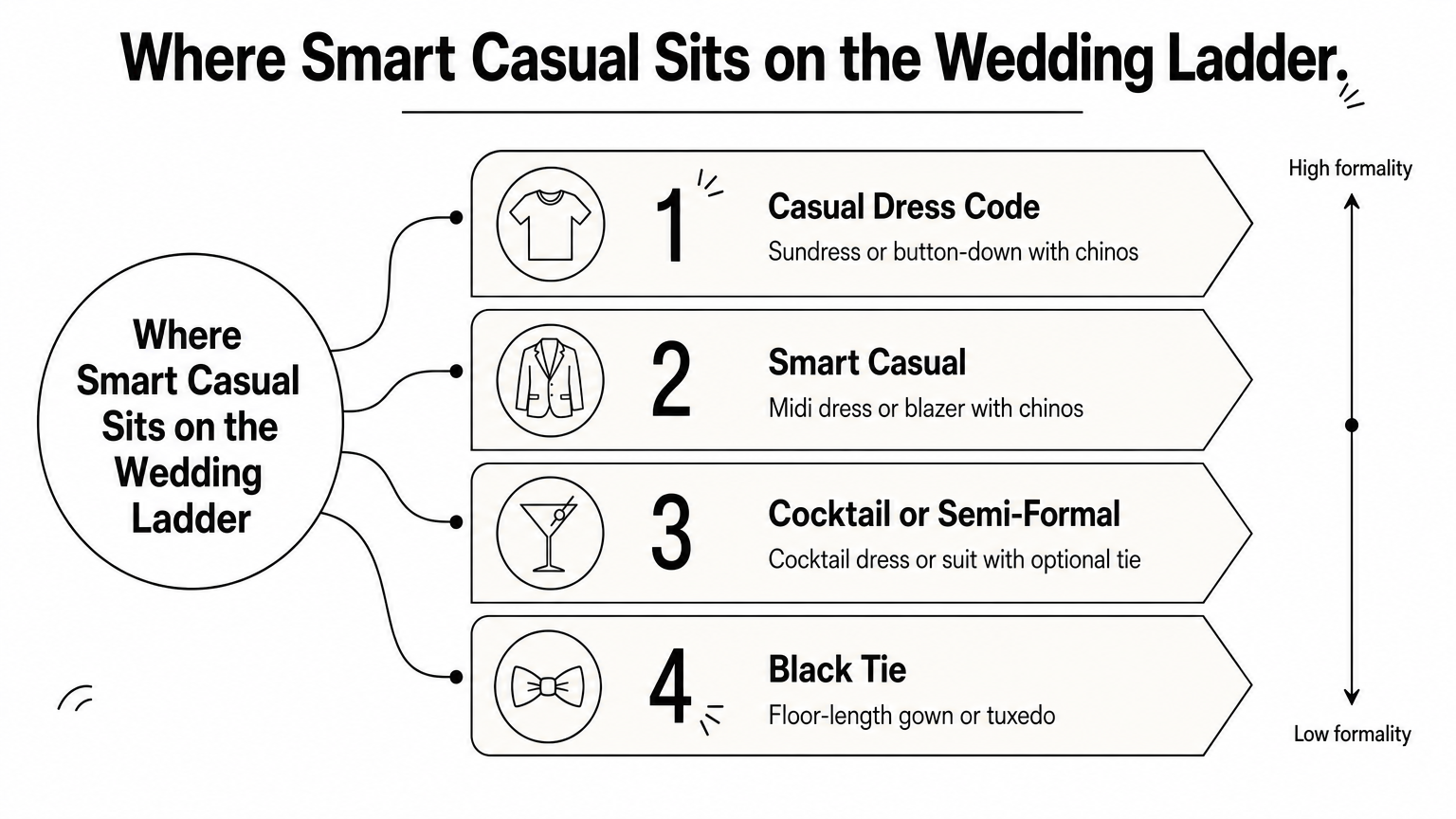
Think of wedding dress codes as a ladder. Smart casual sits in the middle: a clear step up from everyday clothes, and a clear step down from cocktail attire. The table below shows how the rungs compare.
| Dress code | Typical outfit for women | Typical outfit for men | Formality |
|---|---|---|---|
| Casual | Sundress, nice top with a skirt | Button-down, chinos | Low |
| Smart casual | Midi dress, tailored separates, dressy jumpsuit | Blazer, chinos, collared shirt, loafers | Medium |
| Cocktail or semi-formal | Cocktail dress, dressy jumpsuit | Suit, tie optional | Medium-high |
| Black tie | Floor-length gown | Tuxedo | High |
The easiest way to place yourself is to look one rung up and one rung down. If your outfit could pass as cocktail attire, take one element down a notch. If it could pass as a casual weekend look, take one element up.
What couples usually mean by it
Couples usually pick smart casual because the venue is informal, the guest list is small, or they want everyone to enjoy the day without squeezing into formalwear. They still want you to look like you made an effort. A reliable test is whether you would wear the outfit to a nice dinner with friends, and whether it would still look appropriate standing next to a bride.
Check the invitation and the wedding website for clues about the time, the venue, and the season. If those leave you unsure, ask the couple or a member of the wedding party. A quick text beats a guess.
Smart casual at a wedding means dressed up enough to honor the occasion and relaxed enough to stay comfortable all day.
How to dress smart casual for a wedding as a woman
For a smart casual wedding, women should start with one polished base piece, such as a midi dress or tailored separates, and keep everything else simple. The goal is an outfit that looks put together without looking like you’re headed to a gala. This is the standard approach for any smart casual dress code for women at a wedding.
Five outfit formulas that work
Pick one of these combinations and you will be inside the dress code almost every time.
- Midi dress: A knit, crepe, or linen-blend dress that hits at or below the knee, in a solid color or a subtle print.
- Dress with a blazer: The same midi or a knee-length wrap dress, topped with a tailored blazer for cooler venues or evening receptions.
- Tailored trousers and a blouse: Wide-leg or straight pants in a drapey fabric, paired with a silky blouse or a fitted knit top.
- Midi skirt and a polished top: A pleated or satin slip skirt with a tucked-in blouse or a fine knit.
- Dressy jumpsuit: A wide-leg style in a fluid fabric, not a stretchy lounge fabric.
A sundress is also fair game if the fabric looks elevated and the cut isn’t beachy. Skip anything that looks like it belongs at a pool.
Shoes, bags, and jewelry
Shoes should be comfortable but clearly dressy. Block heels, kitten heels, wedges, ballet flats, loafers, and dressy flat sandals all fit. Stilettos and chunky platforms tend to push the look toward cocktail or club, and thin heels sink into grass at outdoor venues.
For accessories, choose one or two statement pieces, not five. A pair of earrings and a bracelet is plenty. Carry a small structured bag or clutch, since a large everyday tote reads as casual. Keep hair and makeup neat and natural. The overall impression should be effortless, not styled for a red carpet.
A worked example: a 4 p.m. garden ceremony in May
Say the invitation reads "smart casual," the ceremony is outdoors at 4 p.m., and the forecast is mild. You’d wear a sage-green midi dress in a lightweight crepe, block-heel sandals, small gold earrings, and a compact clutch. Add a thin blazer or wrap for when the sun drops. Nothing here is white, nothing is floor-length, and every piece could go straight to a nice dinner afterward.
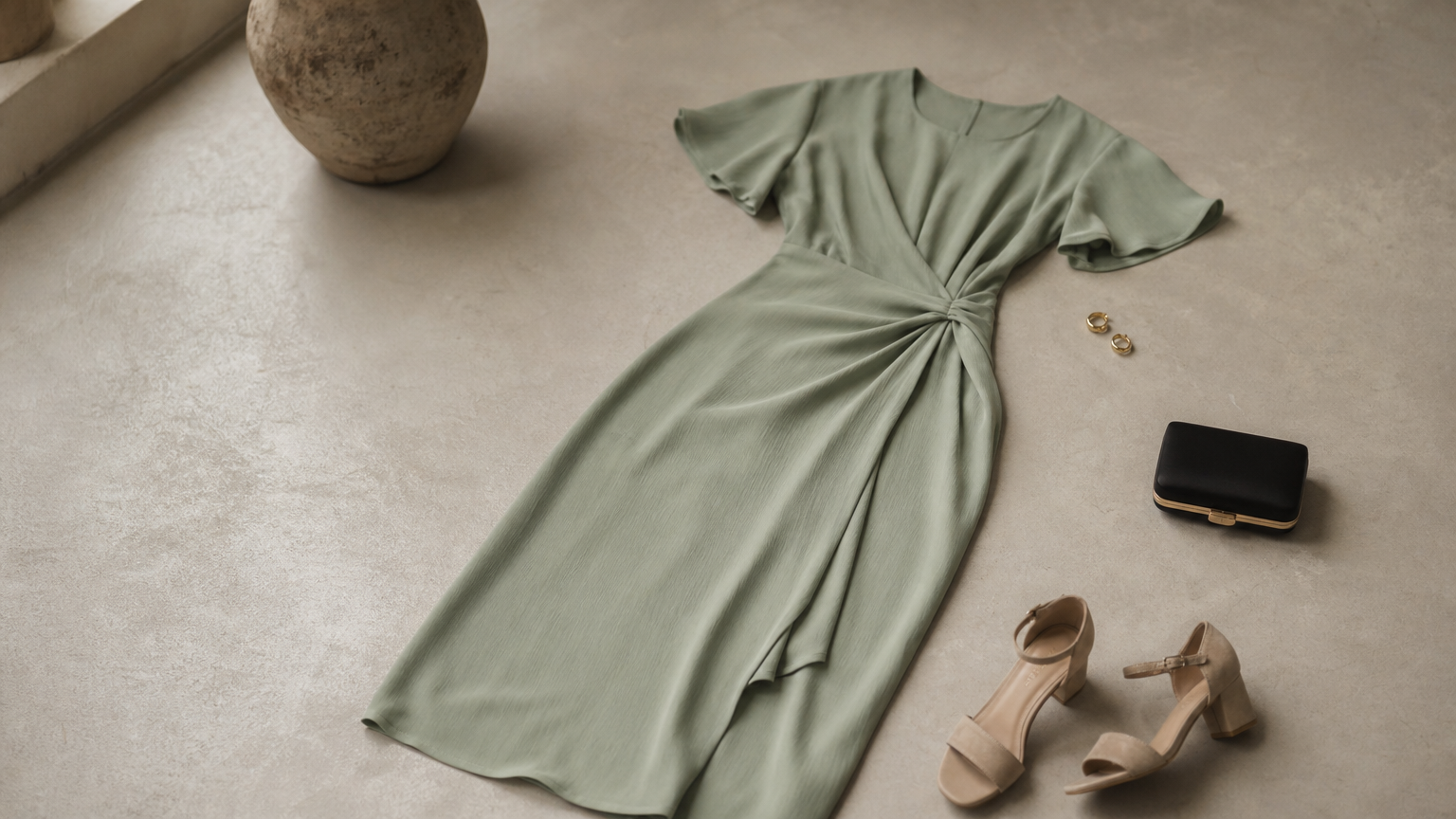
Build the outfit around one polished piece, then keep everything else quiet.
What to wear to a smart casual wedding as a man
Men should wear a blazer or sport coat, chinos or dress trousers, and a collared shirt, with no tie required. That combination covers the dress code for male guests at almost every smart casual wedding, from daytime outdoor ceremonies to evening receptions.
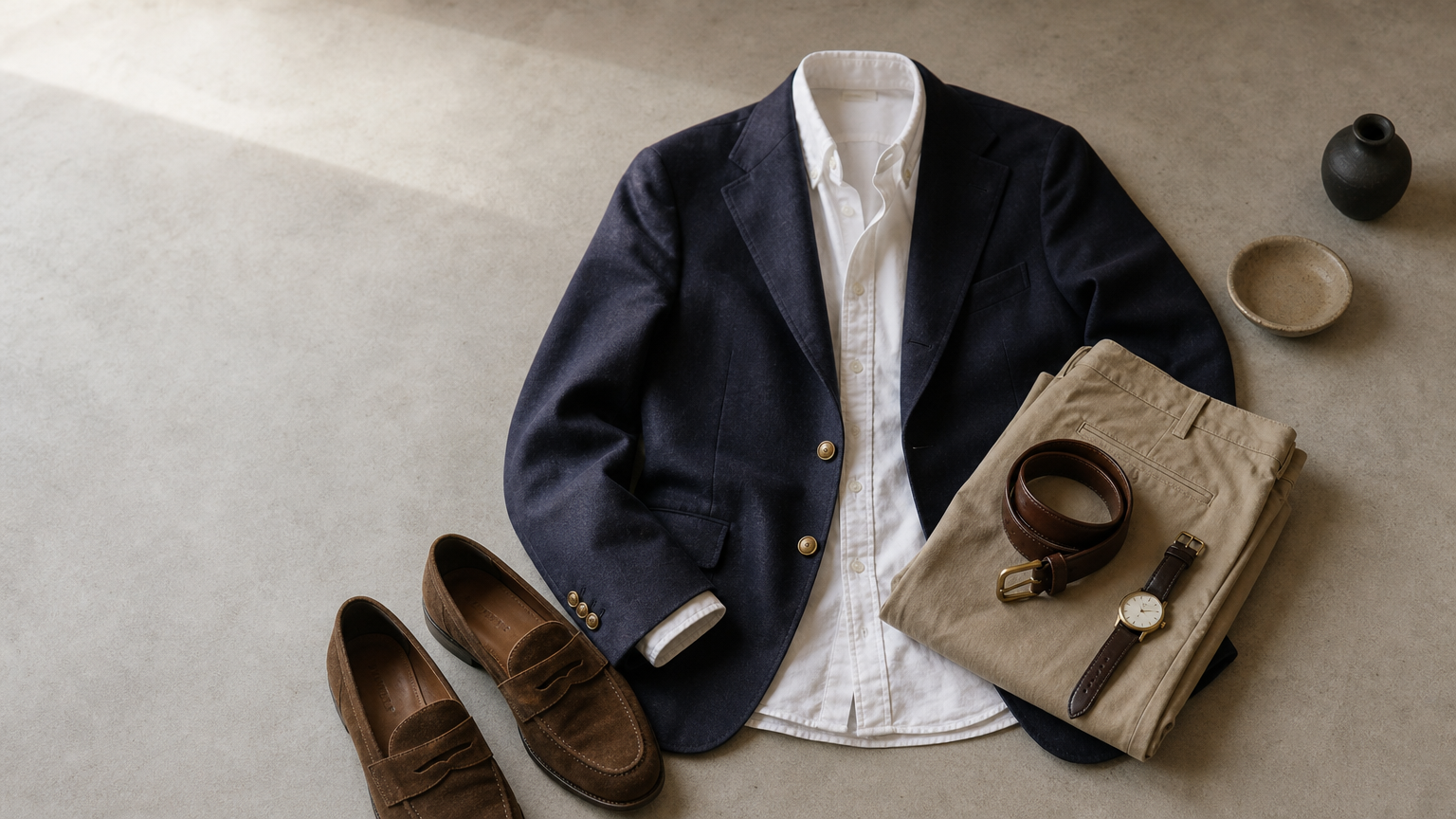
Outfit formulas for male guests
- Classic blazer look: A navy or gray blazer, a button-down shirt in white, blue, or a subtle pattern, and chinos or dress trousers in khaki, navy, or olive.
- Polo or knit variation: A fine-knit polo or a thin crewneck sweater under a blazer, which works well for relaxed venues and cooler weather.
- Suit without the tie: A lighter-colored or linen suit with the top button of the shirt open. Pick a fabric and color that feels relaxed, not boardroom.
- No jacket at all: A crisp button-down, well-fitted trousers, a belt, and nice shoes. This can work for hot outdoor weddings, though a jacket is the safer call.
Fit matters more than price. A well-tailored shirt and trousers look sharper than an expensive outfit that bags or pulls.
Shoes and finishing touches
Loafers, derbies, and clean leather dress shoes are the safe choice. Suede loafers work especially well, and espadrilles or minimalist leather sneakers can work at beach and garden weddings. Avoid athletic sneakers, flip-flops, and heavy work boots.
Skip cufflinks and formal accessories. A watch, a belt that matches your shoes, and an optional pocket square are enough. If you wear a pocket square, match it loosely to your shirt, not your tie, since there is no tie.
For men, smart casual is a tie-free suit’s cousin: tailored, collared, and calm.
What not to wear to a smart casual wedding
The short answer is nothing that is too formal, too sporty, or too revealing, and nothing that competes with the bride. Smart casual rules out more at the extremes than in the middle, so it helps to know the hard no’s and the gray areas separately.
The clear no’s
- White, ivory, or cream head to toe. Guests traditionally leave white to the bride, and that applies at casual weddings too. A white shirt under a blazer is fine.
- Floor-length gowns and tuxedos. These belong to black-tie events and will make you the most dressed-up person in the room.
- Athletic wear and tracksuits. Leggings, joggers, and hoodies are too casual no matter how nice the brand.
- Tank tops, graphic tees, and flip-flops. These read as beachwear or weekend wear.
- Very short or clubwear-style dresses. They shift the look from smart casual to nightlife.
Gray areas: jeans, black, and sneakers
Jeans are the biggest gray area. Dark, clean, well-fitting denim can work at a brewery or ranch wedding when the couple signals a laid-back tone. At a restaurant or indoor venue, trousers are safer. If you aren’t sure, skip them.
Black is fine for evening and for any season. Sneakers are acceptable only when they are clean, simple, and in leather or a similarly dressy style, and only at casual outdoor venues. Bold colors and prints are welcome as long as they stay tasteful and the overall outfit still looks polished.
If an item would look at home at the gym or the club, leave it out.
How to adjust for season, venue, and welcome parties
Adjust a smart casual outfit by changing fabric, color, and shoes to fit the weather, time of day, and setting, while keeping the same polished-but-relaxed look. The table below shows how the same dress code shifts across common wedding settings.
Matching your outfit to the setting
| Setting | Women | Men |
|---|---|---|
| Beach or garden, daytime | Linen-blend midi dress or flowy skirt set, wedges or dressy flat sandals | Lightweight cotton or linen blazer, chinos, loafers or espadrilles |
| City restaurant, evening | Darker crepe or satin midi, block heels, small clutch | Navy or charcoal blazer, dark trousers, leather shoes |
| Barn, brewery, or ranch | Midi dress or trousers, block heels or wedges that handle grass and gravel | Chinos or dark trousers, button-down, leather boots or sturdy loafers |
| Cold weather | Knit dress or sweater with skirt, tights, ankle boots, coat | Fine-knit sweater over a collared shirt, blazer, wool trousers |
Daytime weddings suit lighter colors and breezier fabrics, while evening events call for deeper tones and a touch more polish. Always check the forecast and bring a layer.
Welcome parties and rehearsal dinners
A smart casual welcome party, such as one at a brewery the night before, is usually a half step more relaxed than the ceremony. Save the dressiest outfit for the wedding itself. Women can wear tailored pants or a casual midi with flats or clean boots. Men can wear chinos with a button-down or polo, with or without a blazer. Choose shoes you can stand in for hours, since these events involve a lot of mingling.
One last check before you leave
Ask yourself four quick questions. Is anything white or ivory? Could this outfit work at a nice dinner? Are my shoes comfortable and clean? Does the venue or weather call for a layer? If the answers are no, yes, yes, and yes, you’re dressed correctly.
Match the venue and the weather first, then let your personal style do the rest.
Dress with confidence
A smart casual dress code for a wedding asks for one thing: look polished without looking formal. Women can reach for a midi dress or tailored separates. Men can pair a blazer with chinos and a collared shirt. Avoid white, gowns, athletic wear, and anything that looks like beachwear or nightlife.
Check the invitation, the venue, and the forecast, and choose clothes you can wear comfortably from ceremony to last dance. For more outfit ideas and dress code breakdowns, browse the fashion guides on Boulevard Insight.