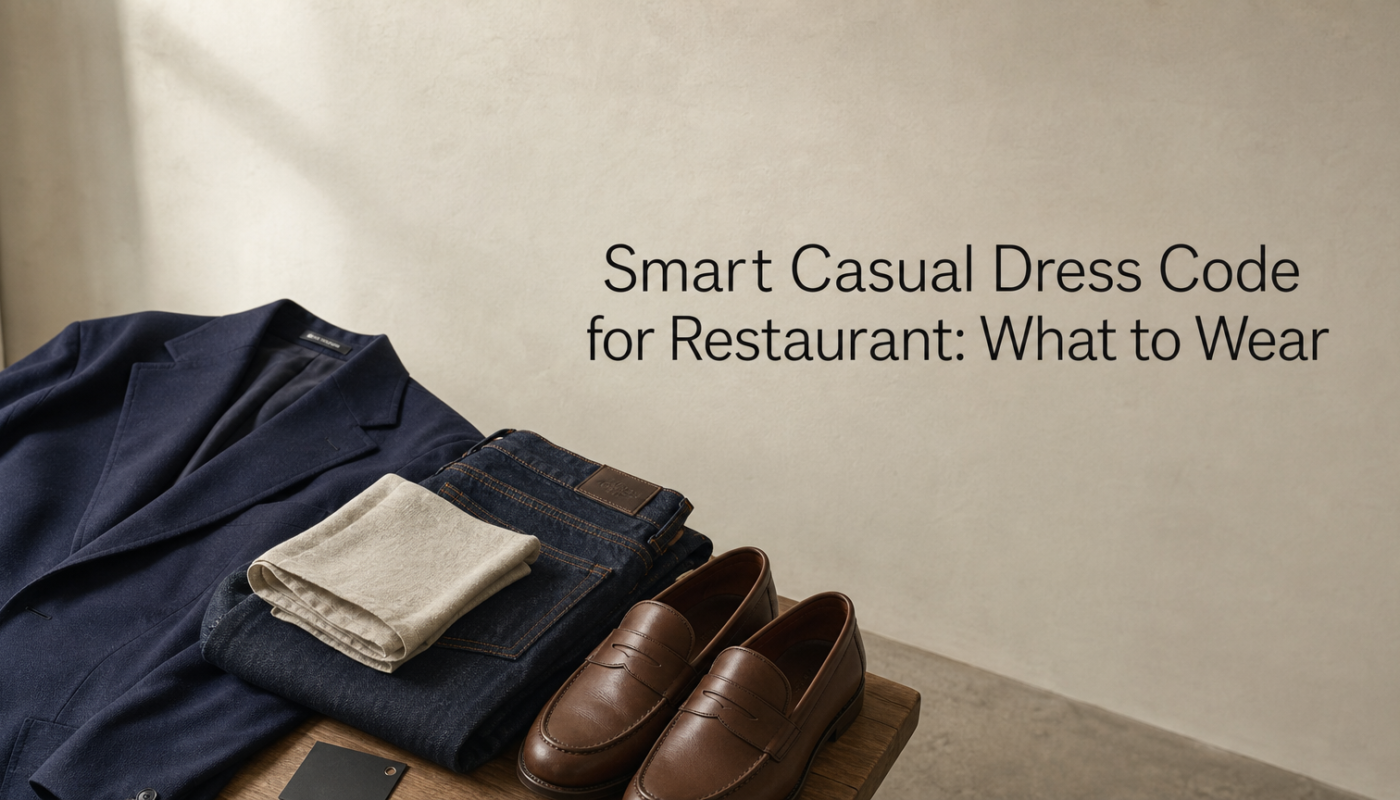
A smart casual dress code for restaurant dining means looking put together without looking dressed up. Think dark jeans or tailored trousers, a collared shirt, blouse or fine knit, and shoes that look finished, such as loafers, flats, ankle boots or minimal leather sneakers. Skip athletic wear, ripped denim, flip-flops and beachwear.
The term is vague on purpose. Restaurants use it to set a tone rather than enforce a uniform, so it reads differently in a neighborhood bistro than in a hotel dining room. That is why so many diners stand in front of the closet wondering whether jeans count.
Boulevard Insight covers dress codes across fashion and travel, and this guide pulls the answers into one place. You will learn why restaurants ask for smart casual, how to build an outfit for it, which items are safe and which are risky, and how to adjust when you are not sure what a particular restaurant expects.
Why restaurants ask for smart casual
Restaurants ask for smart casual to set the tone of the room without shutting out guests who do not own formal clothes. It signals that the evening is a step above a burger joint and a step below a tasting menu.
What the code signals
Owners use the code to protect the atmosphere. Candles, linen and a good wine list feel different when half the room is in gym shorts, so a smart casual restaurant dress code nudges guests toward a polished but relaxed look. It also keeps the door open to tourists, couples on date night and coworkers coming straight from the office.
Smart casual asks you to look like you made an effort, not like you tried to impress.
Enforcement varies. Most restaurants will seat you if you are a little underdressed, but hotel dining rooms and high-end places can ask you to change or decline the table. A quick check beforehand costs nothing, and it beats being turned away at the host stand.
How smart casual compares with other dress codes
The table places smart casual on the usual restaurant scale, which runs from casual to jacket required.
| Dress code | Typical look | Example outfit |
|---|---|---|
| Casual | Relaxed everyday clothes | Jeans, T-shirt, sneakers |
| Smart casual | Polished but relaxed | Dark jeans, blouse or collared shirt, loafers |
| Business casual | Office-style separates | Chinos or slacks, button-down shirt, optional blazer |
| Casual elegant | Dressy, close to formal | Tailored trousers or midi dress, blazer, dress shoes |
| Formal or jacket required | Evening wear | Jacket (and often tie) for men, cocktail or evening dress for women |
Smart casual and business casual overlap, and many people use them interchangeably. The practical difference is that smart casual allows denim and more personality, while business casual leans toward office separates. When in doubt, dress one notch above what you would wear to a casual lunch.
How to dress smart casual for a restaurant
To dress smart casual, pair one relaxed piece with one sharper piece and finish with shoes that look chosen, not grabbed.
The relaxed-plus-sharp formula
Dark jeans become smart casual when you pair them with a blazer or crisp shirt. Tailored trousers feel relaxed with a soft knit. The balance matters more than any single item, so one relaxed piece plus one sharp piece is a reliable starting point for any smart casual dining dress code.
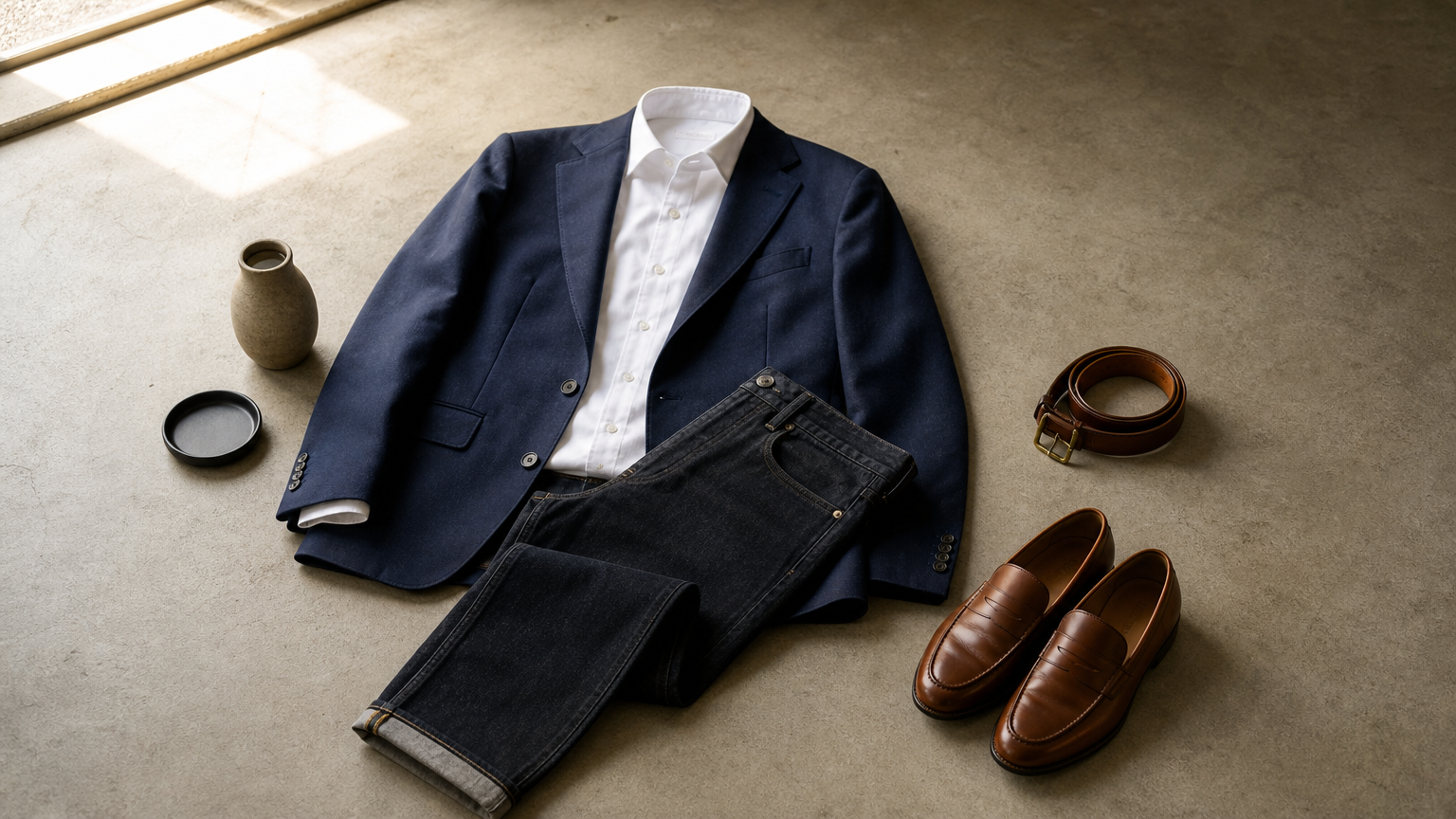
Smart casual is one relaxed piece, one sharp piece, and shoes that look chosen.
Use these building blocks:
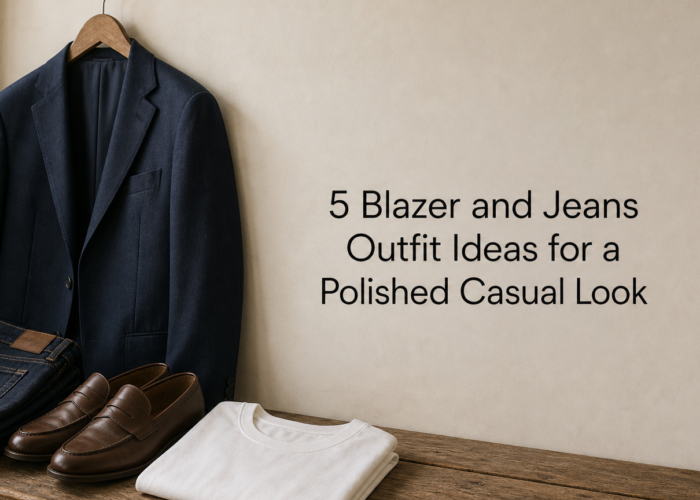
- Tops: collared shirt, silk or satin blouse, fine-knit sweater, polo, or a plain fitted tee under a blazer
- Bottoms: dark straight or slim jeans without rips, chinos, tailored trousers, a midi skirt
- Layers: blazer, structured cardigan, or a clean jacket
- Shoes: loafers, ballet flats, low heels, ankle boots, minimal leather sneakers
Details that make it look intentional
Fit and condition do more work than price. Clothes should be clean, pressed and well fitted, with no pilling, fading or large logos. Stick to solid colors or subtle patterns in fabrics like cotton, wool, linen, silk or dark denim.
Time of day also matters. Dinner calls for a slightly sharper version than lunch. Swap sneakers for loafers, add a blazer, and pick darker colors. A simple belt, watch or small jewelry finishes the outfit without turning it into a costume.
Jeans, shorts, sneakers and other gray areas
Jeans are usually fine at a smart casual restaurant if they are dark, clean and free of rips. Shorts usually are not.
Jeans and shorts
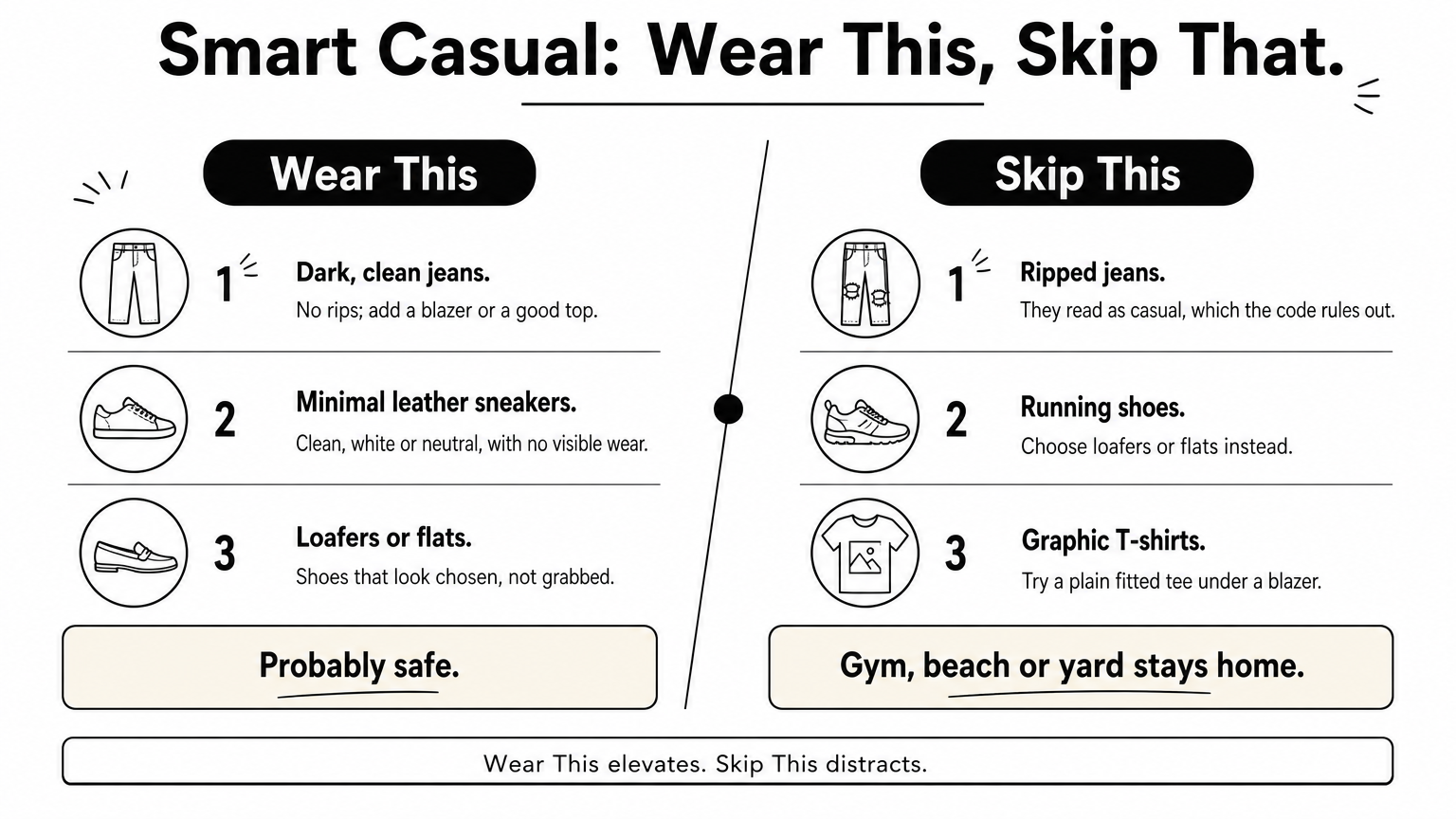
Dark-wash jeans in a straight or slim cut pass at almost every smart casual restaurant. Skip distressed, bleached or heavily faded pairs, and dress them up with a blazer or a good top. Ripped jeans read as casual, which is exactly what the code is meant to rule out.
Dark, clean jeans pass. Shorts rarely do.
Shorts are the harder question. At dinner they are generally out. The one exception is tailored, knee-length shorts at a beach or resort restaurant at lunch, and even then you should check the venue first. Cargo, athletic and cutoff shorts never work.
Shoes, tops and what to avoid
Use this table as a quick check before you walk out the door.
| Item | Verdict | How to make it work |
|---|---|---|
| Dark jeans | Usually fine | No rips, add a blazer or good top |
| Ripped jeans | Avoid | Swap for chinos or dark denim |
| Tailored shorts | Risky | Only at resort lunches, check first |
| Cargo or athletic shorts | Avoid | Wear trousers instead |
| Minimal leather sneakers | Often fine | Clean, white or neutral, no wear |
| Running shoes | Avoid | Choose loafers or flats |
| Flip-flops | Avoid | Try dressy flat sandals or closed shoes |
| Graphic T-shirt | Avoid | Plain fitted tee under a blazer |
| Hoodie, sweatpants, athleisure | Avoid | Save for casual spots |
| Tank top | Avoid for men | Women can layer a silk cami under a blazer |
| Hat | Remove at the table | Many restaurants prefer it off |
The rule behind the table is simple. Anything designed for the gym, beach or yard stays home. Anything you would wear to a Friday client meeting is probably safe.
Smart casual outfits for women and men
Smart casual outfits work best as simple formulas you can repeat with whatever you own.
Women’s outfits
For a smart casual dress code women can follow at any restaurant, start with one of these combinations:
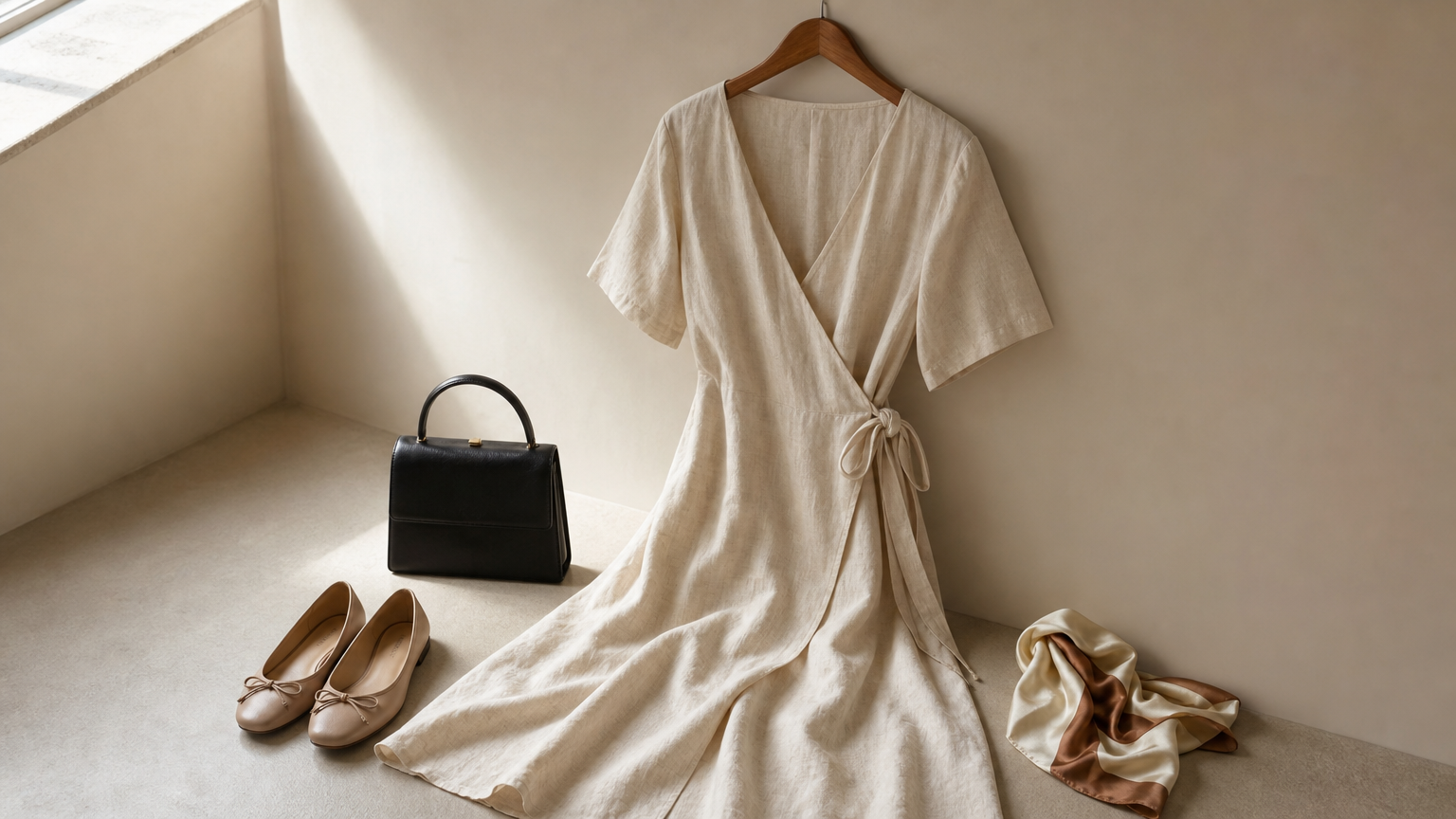
- A wrap dress with low heels or flats and a light jacket
- Tailored trousers, a silk or satin top and loafers
- Dark jeans, a fitted knit or bodysuit, a blazer and ankle boots
- A midi skirt, a tucked-in fine knit and ballet flats
Keep accessories simple and structured. A small leather bag and one statement piece, such as earrings or a scarf, are enough.
A good outfit has one focal point, and the rest stays quiet.
Men’s outfits
Men have an easy formula: a shirt with some structure, trousers that fit, and leather shoes. Try one of these:
- Chinos, a tailored button-down shirt and leather loafers
- Dark jeans, a fine knit or polo, an unstructured blazer and suede boots
- Tailored trousers and an open-collar shirt with leather shoes, no tie needed
A tailored shirt with chinos is the safest default, especially at hotels and upscale venues. Avoid cargo shorts, graphic tees and worn sneakers.
How to read the restaurant before you go
Check the restaurant’s website, reservation page and recent photos before you choose an outfit, because smart casual means different things in different rooms.
Clues to check ahead
Run through this list the day before:
- The dress code line on the website or reservation confirmation
- Recent guest photos on Google Maps or Instagram, which show what diners actually wear
- The setting: a hotel, rooftop or steakhouse leans dressier than a neighborhood bistro
- The time and season: dinner is dressier than lunch, and resort towns run more relaxed
- A short call or message to the host if anything is unclear
When the dress code is unclear, the guest photos tell you more than the wording does.
If clues conflict, dress up slightly. It is easy to look polished in a relaxed room and awkward to look casual in a dressy one.
Dressing for a day out that ends at dinner
If you are sightseeing all day and eating out in the evening, comfortable dark jeans, a clean knit and leather sneakers or flats cover both. Carry one polished layer, such as a blazer, in your bag.
Before dinner, add the blazer, swap sneakers for loafers if you packed them, and put on a bit of jewelry or a scarf. That small change takes five minutes and moves the outfit from sightseeing to smart casual.
What to remember about smart casual
Smart casual at a restaurant means polished but relaxed. Pair one relaxed piece with one sharper piece, keep everything clean and fitted, and leave athletic wear, beachwear and ripped denim at home. Dark jeans are usually fine, shorts rarely are, and clean minimal sneakers depend on the room.
When you are unsure, check the restaurant’s photos, then dress one notch up. If you want more outfit ideas for dinners, trips and every season, browse more fashion and dress code guides on Boulevard Insight.