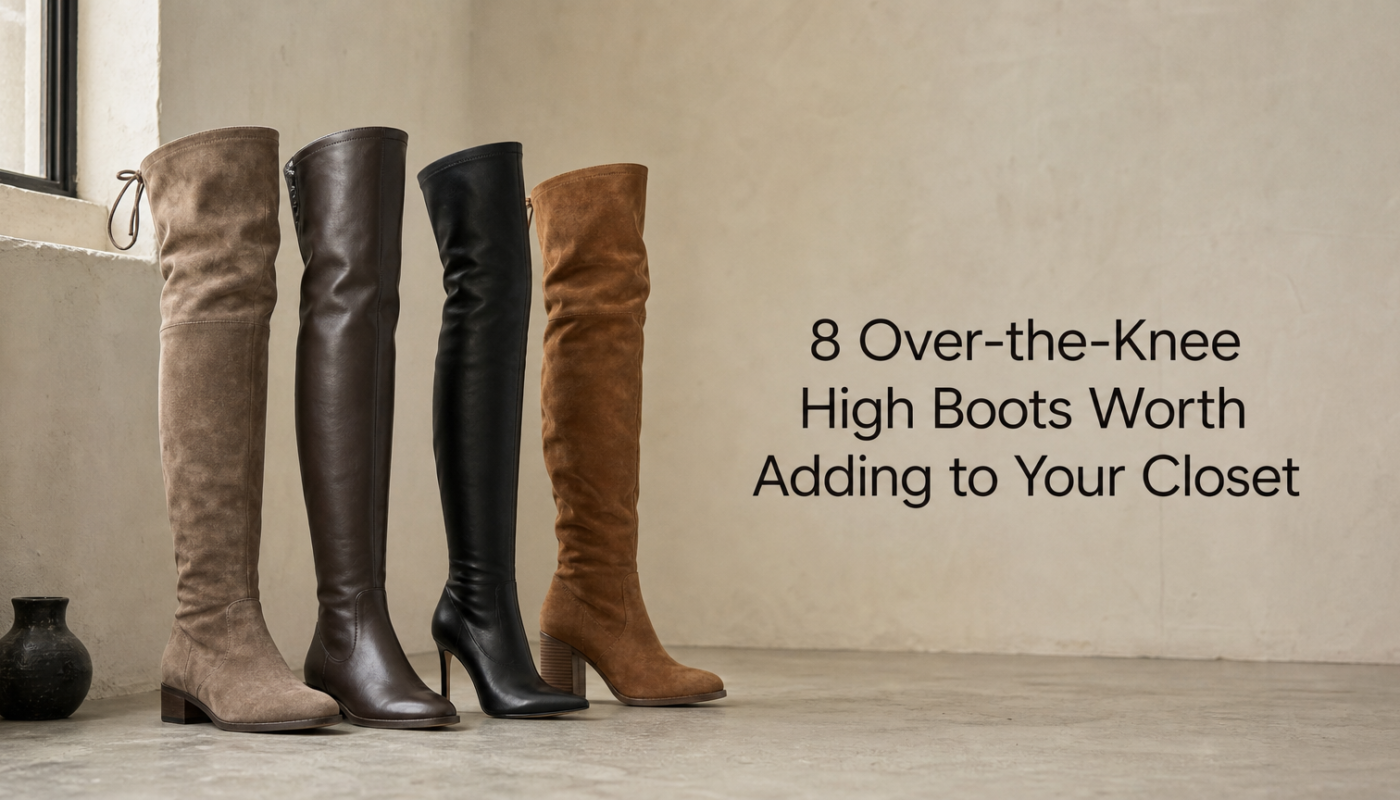
You have probably scrolled through a dozen shops trying to find over knee high boots that actually look good and fit right, only to end up with a browser full of tabs and no decision. Between suede, leather, block heels, and flat styles, the options blur together fast, and half the pairs online look nothing like the photos once they arrive.
This list solves that problem. We picked eight standout pairs of over the knee boots for women that cover the range you actually want: comfortable flats for daily wear, sleek heeled versions for date night, and a few splurge-worthy designer takes for when you want something that lasts for years, building on the over the knee boots styles women reach for season after season. Each pick includes what makes it worth your money and who it fits best.
Whether you are after high heel over the knee boots for a night out or a flat pair you can wear all day without foot pain, you will find a match here. We also cover sizing quirks, material differences, and styling notes so you walk away ready to buy, not just browse.
1. Flat over-the-knee boots

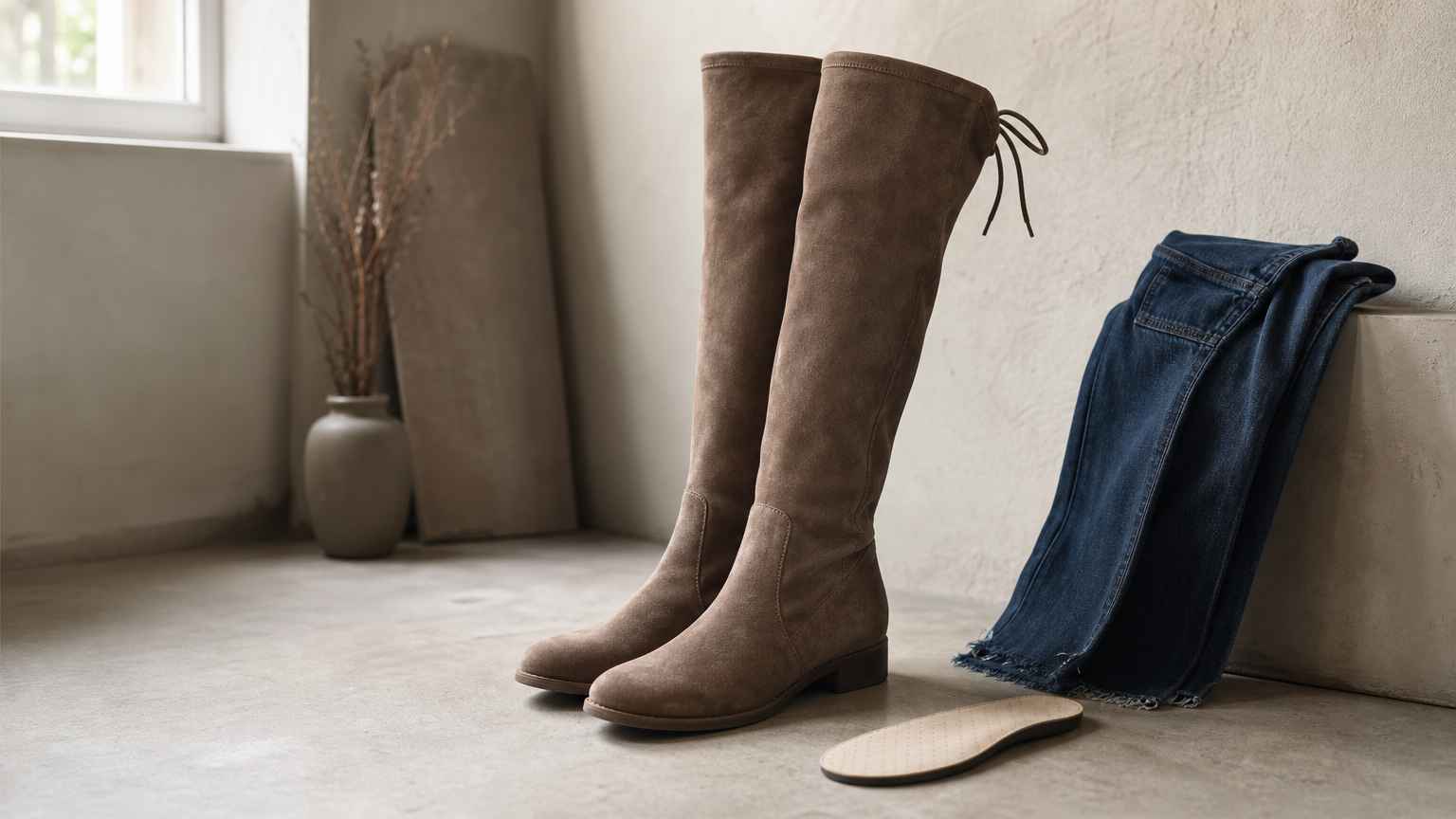
Flat over-the-knee boots solve the biggest complaint people have about this style: sore feet after an hour of walking. These boots ditch the heel entirely, running from a slight wedge to a completely flat sole, so you get the dramatic silhouette without the balancing act. They’re the pair most shoppers search for first once they realize a 4-inch stiletto isn’t practical for a full day of errands or a work commute.
What makes it stand out
The main draw here is all-day comfort paired with the same leg-lengthening effect as their heeled cousins. A flat sole distributes your weight evenly, which matters a lot once you’re talking about boots that climb past the knee and add real weight to your stride. Look for a cushioned footbed and a sole with some flex at the ball of the foot; stiff flat boots can feel like walking in a cast, which defeats the purpose of choosing flat in the first place.
Flat over-the-knee boots give you the statement silhouette without asking your feet to suffer for it.
Who it’s best for
This style suits anyone who’s on their feet most of the day: teachers, retail workers, parents chasing toddlers, or commuters who walk to the train. It’s also the safest starting point if you’ve never owned over the knee boots for women before and aren’t sure how the fit and proportions will work on your body. If you’ve tried heeled versions in the past and found them uncomfortable or unstable on uneven sidewalks, flat is the fix.
How to style it
Flat pairs read more casual than heeled ones, so lean into that. A few combinations that work well, plus more outfit ideas for tall boots:
- Skinny jeans tucked into the boot shaft, with an oversized sweater on top
- A midi skirt or dress with the boots peeking out below the hem
- Leggings and a long cardigan for a relaxed weekend look
- Shorts with tights underneath during colder months, since the boot covers most of the leg anyway
Stick to a slightly slouchy or fitted shaft depending on your calf shape. Loose, baggy shafts on a flat boot can look sloppy rather than intentional.
What to expect to pay
Pricing on flat over-the-knee boots spans a wide range depending on material and brand, but here’s a general breakdown of what you’ll find at each tier:
| Price range | What you typically get |
|---|---|
| $40-$80 | Synthetic materials, basic construction, shorter lifespan |
| $80-$150 | Genuine suede or leather uppers, better stitching, more comfortable footbeds |
| $150-$300+ | Premium leather, reinforced soles, brand-name quality built to last several seasons |
Most shoppers find their sweet spot in the $80-$150 range, where the materials hold up to regular wear without hitting designer prices.
2. Leather over-the-knee boots
Leather over-the-knee boots are the workhorse of this list. They’re the pair you reach for when you want something that looks polished without trying too hard, and they age better than almost any other material on this list. Genuine leather develops a patina over time instead of cracking or peeling, which means the boots you buy alongside this year’s fall trends worth actually wearing can still look sharp three winters from now.
What makes it stand out
What sets these apart is durability paired with structure. Leather holds its shape around the calf and ankle better than suede or synthetic blends, so the boot looks the same on day 200 as it did on day one. A quality pair also develops a soft broken-in feel after a few wears, molding slightly to your leg without losing its silhouette.
A good leather boot doesn’t just survive years of wear, it looks better because of them.
Who it’s best for
This style suits shoppers who want one reliable pair rather than several trend-driven ones. If you’re building a capsule wardrobe or you hate replacing boots every season, leather over-the-knee boots for women are the smarter long-term buy. They also work well for anyone commuting through unpredictable weather, since leather resists light rain far better than suede.
How to style it
Leather’s structured look pairs naturally with tailored pieces:
- A blazer and tailored trousers tucked into the boot for office-to-evening wear
- A wrap dress with a leather jacket for contrast
- Straight-leg denim with a fitted turtleneck
- A trench coat for a classic, put-together silhouette
Because leather reads more formal than suede, save this pair for occasions where you want to look intentional rather than thrown-together.
What to expect to pay
Genuine leather starts around $100 and climbs past $250 for full-grain construction with reinforced stitching. Budget synthetic "leather-look" pairs run $50-$90 but won’t hold up nearly as long. If you only buy one high-quality pair this year, this is the category worth stretching your budget for.
3. Suede over-the-knee boots
Suede over-the-knee boots bring the texture and warmth that leather can’t match. The nap of the material catches light differently depending on the angle, giving these boots a richness that reads more expensive than their price tag often suggests. If you want a pair that feels dressed-up even with jeans, suede does that work for you.
What makes it stand out
Texture is the whole point here. Suede has a soft, matte finish that looks warmer and more forgiving than polished leather, which makes it a favorite for wearable fall and winter styles. It also hugs the leg more closely than stiff leather, so the shaft tends to fold slightly at the ankle for that lived-in, effortless look shoppers chase when they picture over the knee high boots in editorial spreads.
Suede gives you the dressed-up look of leather with a softer, more forgiving finish.
Who it’s best for
This style suits anyone who lives somewhere dry, since suede and rain don’t mix well without a protective spray. It’s a strong pick if your closet leans toward soft knits, wide-leg trousers, and muted color palettes, since suede photographs beautifully against those textures. Skip it if you’re in a rainy climate or don’t want to bother with upkeep.
How to style it
Suede pairs naturally with soft, autumnal outfits:
- A camel coat and cream sweater for a monochrome look
- Corduroy skirts or dresses in burgundy or olive
- A slouchy turtleneck with straight-leg denim
Stick to muted tones. Suede in bright colors can look costume-like rather than polished.
What to expect to pay
Expect to pay $90-$200 for quality suede, with designer versions climbing higher. Budget from a protective spray on day one; it’s the difference between a boot that lasts three seasons and one that stains after the first rainy walk to work.
4. Stiletto heel over-the-knee boots
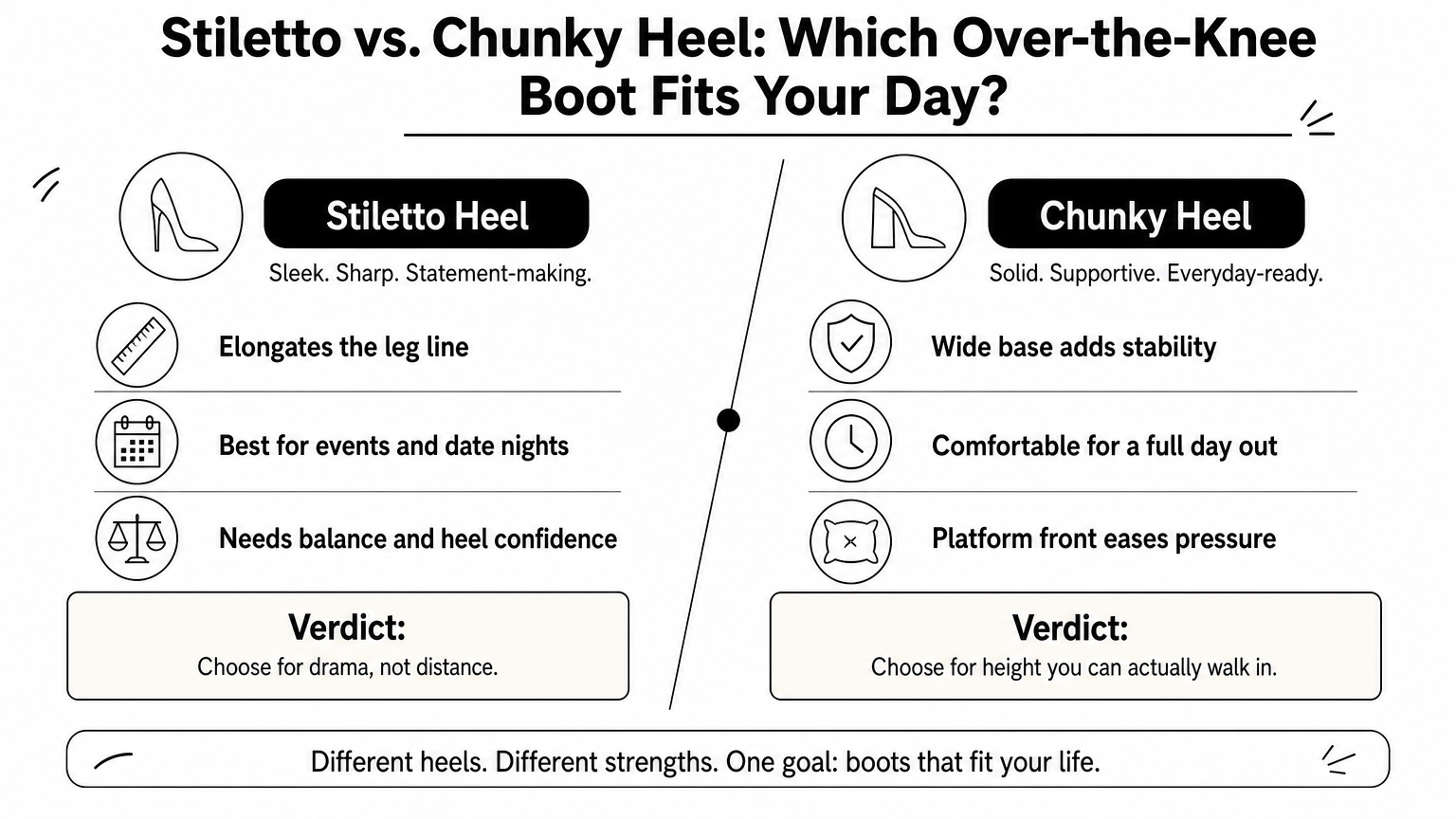
Stiletto heel over-the-knee boots are the pair you buy when you want maximum drama. The thin heel elongates your leg even further than a flat or chunky sole, and the tight shaft fit that usually comes with this style hugs the leg from ankle to thigh. These are the high heel over the knee boots most people picture when they think of a going-out look, not an everyday errand pair.
What makes it stand out
The silhouette is unmatched. A thin, tapered heel paired with a snug shaft creates a leg line that no flat or block-heel boot can replicate. Most versions sit between 3 and 4.5 inches, which is enough height to change your posture and your outfit’s whole energy without tipping into painful territory, provided the fit is right.
A stiletto over-the-knee boot doesn’t just add height, it changes how you stand and move.
Who it’s best for
This style suits anyone with an event on the calendar: a date, a holiday party, a night out with friends, and it pairs easily with a romantic date-night dress. It also works for anyone confident walking in heels already, since the narrow base demands more balance than a wedge or block heel. Skip this pick if you’re new to heels in general or you know you’ll be on your feet for hours without a chance to sit.
How to style it
Stiletto over-the-knee boots pair best with pieces that let the leg line show:
- A mini or short shift dress
- Tailored trousers with a slit or cropped hem
- A fitted sweater dress in a neutral tone
Avoid bulky layers on top; the whole appeal is the sleek line from hip to toe.
What to expect to pay
Budget synthetic versions start around $60, but the heel tends to feel unstable at that price point. Quality leather or suede stilettos with a reinforced heel run $120-$250, and that reinforcement matters more here than in any other style on this list, since a wobbly heel on a tall boot is genuinely risky.
5. Chunky heel over-the-knee boots
Chunky heel over-the-knee boots split the difference between the flat pair you wear all day and the stiletto you save for a night out. The wider base gives you real stability on wet sidewalks or uneven pavement, while the added height still delivers the leg-lengthening look that draws people to over the knee high boots in the first place. If you want the drama of a heel without the wobble, this is the category to shop first.
What makes it stand out
Stability is the headline feature. A wide, stable base means you can actually walk a full block without gripping a friend’s arm for balance, something stilettos rarely offer past hour one. Most versions sit between 2 and 3.5 inches, tall enough to shape your calf and posture but low enough that you forget you’re wearing a heel by midday. Many pairs also add a platform front, which lowers the effective incline and takes pressure off the ball of your foot.
A chunky heel gives you height you can actually walk in, not just stand in.
Who it’s best for
This pick suits anyone who wants a heel for work or a full day out but doesn’t trust a thin stiletto on cobblestones or subway stairs. It’s also a smart choice if you’re new to heeled boots and want a forgiving entry point before trying anything narrower.
How to style it
Chunky heels work with structured and casual pieces alike:
- Straight-leg trousers cropped above the boot shaft
- A sweater dress with tights for cold-weather layering
- Denim shorts for a bolder, leg-baring look
What to expect to pay
Expect $70-$130 for solid synthetic or bonded leather pairs, and $150-$220 for full leather with a reinforced heel base. The platform construction adds a bit to the price, but it pays off in comfort if you’re wearing these for more than a couple hours at a stretch.
6. Wide-calf and comfortable over-the-knee boots
Wide-calf over-the-knee boots exist because most standard boots simply won’t zip past a calf that measures more than 15 inches. Brands that build for this shape start with a wider shaft pattern from the start, rather than stretching a narrow boot and hoping for the best. If you’ve ever forced a zipper closed and spent the day worried it would split, this category solves that specific frustration.
What makes it stand out
The fit is the whole story here. These boots use a roomier shaft pattern cut for calves in the 15 to 19 inch range, often with a stretch gore panel at the back that flexes with your leg instead of fighting it. Some pairs also add adjustable buckles or laces near the top so you can fine-tune the fit at the exact point where standard boots usually pinch.
A wide-calf boot isn’t a bigger version of a standard boot, it’s built on a different pattern entirely.
Who it’s best for
This style suits anyone who has given up on over the knee ladies boots after too many zipper failures or boots that gap awkwardly at the top. It also works well for athletic builds with muscular calves, not just larger frames, since the extra room benefits any shape that a narrow shaft can’t accommodate.
How to style it
A few combinations that flatter a wider shaft:
- Straight-leg jeans that skim rather than cling to the calf
- A-line skirts or dresses that balance the boot’s width
- Leggings with a longer tunic top to keep proportions even
What to expect to pay
Wide-calf construction adds cost because brands need separate patterns and often more material. Expect $90-$160 for solid synthetic or bonded leather versions, and $180-$260 for genuine leather with adjustable panels. Paying a bit more here is worth it, since a boot that actually fits your calf will get worn far more than one that technically zips but pinches by noon.
7. Waterproof over-the-knee boots
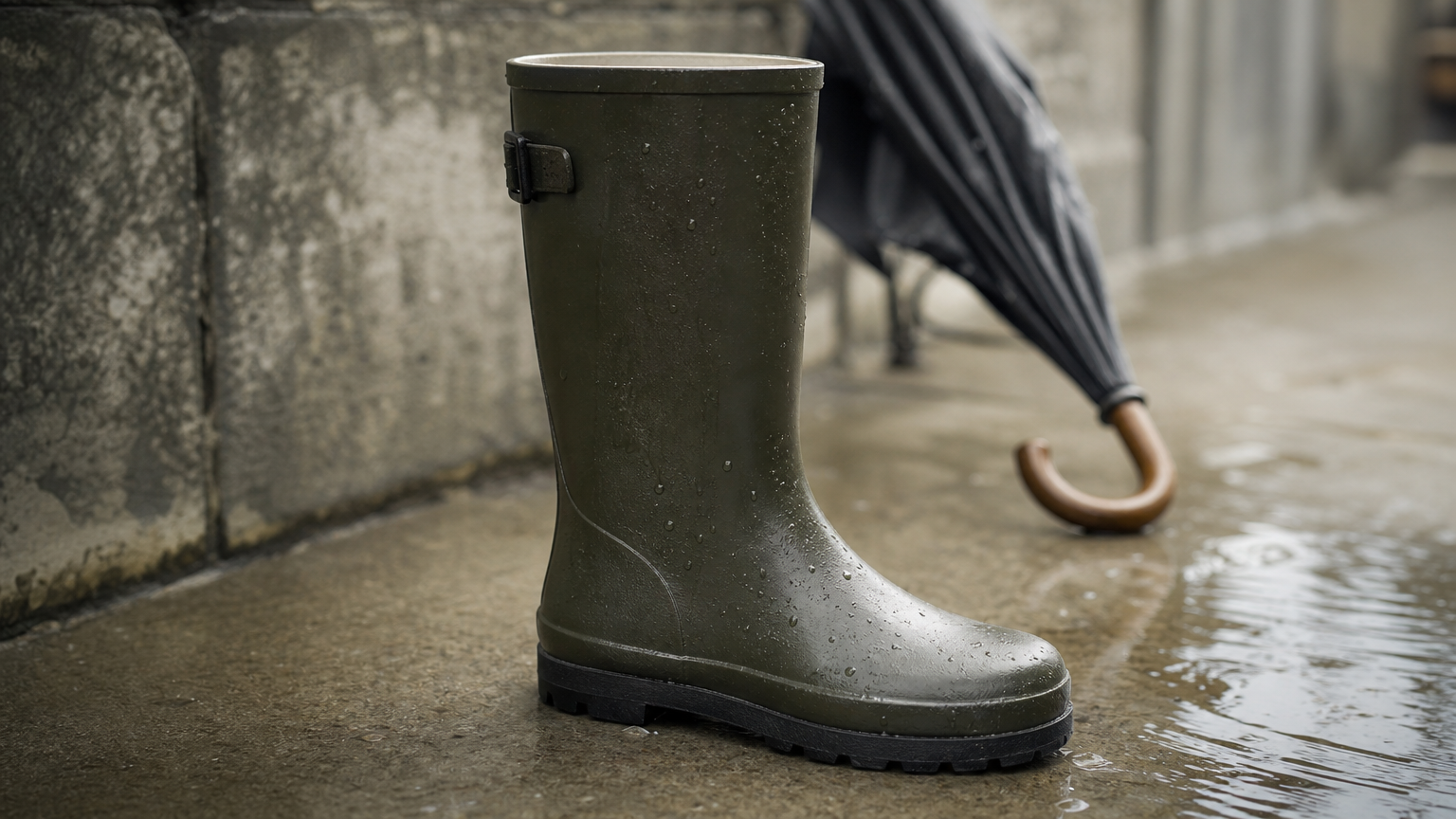
Waterproof over-the-knee boots earn their spot on this list for one reason: rain and slush ruin suede and even some leathers within a single season. These boots swap in treated materials, sealed seams, and rubberized soles so a downpour or a slushy curb doesn’t turn a $150 investment into a stained mess. If you live somewhere with real winters or unpredictable weather, this is the category that protects the rest of your boot budget.
What makes it stand out
The construction is built around keeping water out, not just looking good once it’s dry. Most pairs use sealed seams at the sole and shaft join, plus a rubberized or treated exterior that beads water instead of soaking it in. Better versions also line the interior with a moisture-wicking material, so your feet stay dry even during a long commute in the rain.
A waterproof boot protects your feet today and your investment for years of wet-weather wear.
Who it’s best for
This style suits anyone who deals with real weather: snow, sleet, or heavy seasonal rain. It’s also the smart pick for anyone who’s ruined a suede or leather pair before and doesn’t want to repeat that expense. Commuters who walk to work regardless of forecast get the most use out of this category.
How to style it
Waterproof boots tend to have a slightly more rugged look, so pair them accordingly:
- Skinny jeans tucked in, topped with a wool coat
- Leggings and an oversized parka for snowy commutes
- A knit dress with tights for a softer contrast against the sturdier boot
What to expect to pay
Basic waterproof coating on a synthetic boot runs $60-$100, while fully sealed, treated leather versions with rubberized soles run $130-$220. Reapplying a waterproofing spray every season, even on boots marketed as waterproof, keeps the seal working and extends the boot’s life well past its first wet winter.
8. Designer over-the-knee boots
Designer over-the-knee boots close out this list because they represent the ceiling of what this style can do. Names like Stuart Weitzman, Saint Laurent, and Gianvito Rossi built entire reputations partly on this silhouette, refining the fit and proportions until other brands started copying their patterns. If you’ve ever tried on a designer pair after wearing budget versions for years, you’ll notice the difference within the first few steps.
What makes it stand out
Construction quality is the real differentiator here, not just the label. Designer pairs use premium leather or suede sourced for consistency, meaning less variation in texture or stretch across the batch. They also invest in precision shaft shaping, so the boot follows your leg’s natural taper instead of gaping or bunching at the knee. That fit alone is often worth the price jump for shoppers who’ve struggled with off-the-rack proportions.
Designer over-the-knee boots earn their price through fit precision most budget brands never bother to chase.
Who it’s best for
This category suits anyone who follows women’s fashion closely enough to wear boots often and justify a cost-per-wear argument, someone who’ll get 100-plus wears out of a single pair over several years rather than one season. It’s also the right call if you’ve had recurring problems with fit, since designer brands tend to offer more size and calf-width options than mass-market labels. If you buy boots once a decade and want them to last, this is where to spend.
How to style it
Designer boots hold their own without much competition from the rest of the outfit:
- A simple slip dress and structured coat
- Wide-leg trousers with a fitted turtleneck
- A monochrome outfit that lets the boot’s craftsmanship stand out
What to expect to pay
Entry-level designer pairs start around $500, with well-known names like Stuart Weitzman often landing between $600 and $900. Limited runs or exotic leathers can push past $1,500. At this price, cost-per-wear only makes sense if you’ll actually wear them season after season, not just once for photos.
Finding the right pair for you
Eight styles, one decision left: match the boot to your actual life, not the outfit photo that started this search. A commuter who walks six blocks in the rain needs waterproof over-the-knee boots, not suede. Someone with a wide calf shouldn’t force a standard shaft and hope the zipper holds. And if you’re buying your first pair of over knee high boots, start flat or chunky heeled before you commit to a stiletto shaft.
Price matters too, but fit matters more. A $90 boot that fits your calf and gets worn every week beats a $300 pair that sits in the closet because it pinches. Revisit the price tables above, pick the category that matches your climate and calendar, then shop with those specifics in mind instead of scrolling endlessly again.
Ready to buy? Shop over-the-knee boots and compare pairs by material, heel height, and calf fit in one place.