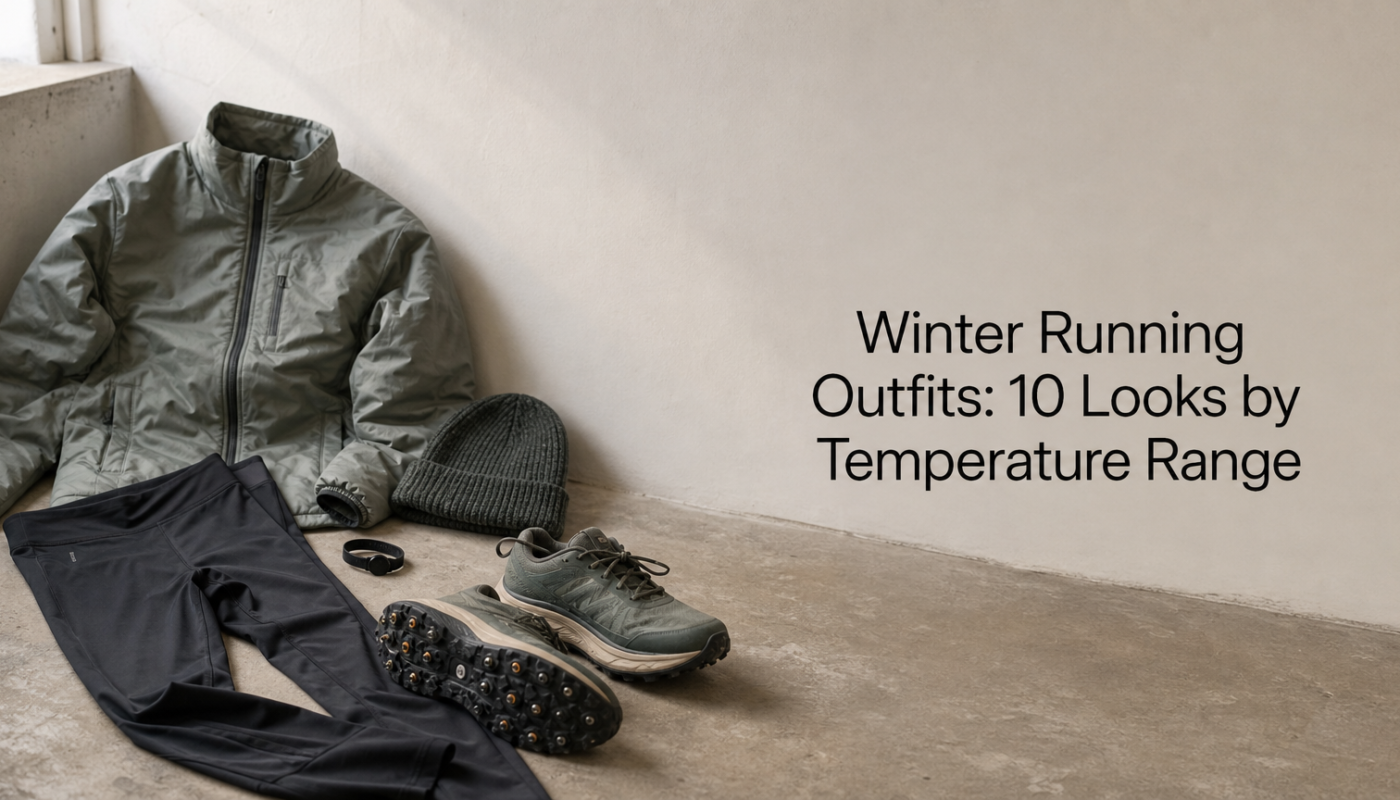
Cold-weather runs go wrong in two ways. You bundle up and feel like a sweaty marshmallow by mile two, or you dress light and spend the first ten minutes shivering. The fix is not a bigger coat. It is picking winter running outfits that match the actual temperature outside.
Here is the short answer. Dress for 10 to 20 degrees warmer than the thermometer says, because your body heats up fast once you move. Start with a moisture-wicking base layer, add insulation only when it drops below about 40°F, and finish with a wind-blocking layer when gusts hit. Cotton is the one fabric to skip.
Below, you’ll find 10 looks organized by temperature range, from crisp 45°F mornings down to single digits. Each one lists the exact pieces, from tights and thermal tops to gloves, headbands, and shoes, so you can build a look that is practical and still looks put together. Pick your range, check the list, and head out the door.

1. Light long sleeve and shorts for 50-60°F
Think of this as the on-ramp to winter running outfits. The air has a bite, but heavy layers will still cook you by mile two, so the goal is to stay light and flexible.
The outfit
Start with a light long sleeve top and your regular running shorts. Nothing here needs to be new. If you ran in August, you already own most of it.
- Light long sleeve in polyester or a merino blend, roughly 120 to 150 gsm
- Running shorts with a 5 to 7 inch inseam and a built-in liner
- Moisture-wicking socks, no-show or quarter crew
- Your everyday trainers
- Optional: a thin cap or sunglasses for low sun
Why it works
Running generates heat fast, so a 55°F morning feels closer to 70°F once you settle into a rhythm. A thin sleeve takes the edge off the first cold mile, and bare legs dump excess heat because your big leg muscles do most of the work. Covering them this early is the most common overdressing mistake.
At 50 to 60°F, cover your core and let your legs breathe.
Fabric matters more than thickness here. Wicking synthetics or merino pull sweat off your skin so it evaporates instead of chilling you when you slow down. Cotton does the opposite. It holds moisture and leaves you clammy at the first stoplight.
Best for
Choose this look when the weather is dry and the wind is calm. It suits easy runs, long runs, and tempo workouts equally well, since you won’t overheat as the pace climbs. It also works for runners who run warm and start every season in shorts.
- Fall road runs and trail miles
- Morning workouts when it’s cool but not cold
- Races where you want to feel light at the start line
Easy swaps and add-ons
Small tweaks cover most of the variation inside this 10-degree range. If you run cold, go for the long sleeve at the low end and add one item. If you run hot, drop to a short sleeve by 58 to 60°F.
| Condition | Swap or add-on |
|---|---|
| Breezy, near 50°F | Thin wind vest over the long sleeve |
| Cold start, warm finish | Arm sleeves you can pull down mid-run |
| Light drizzle | Brimmed cap to keep rain off your face |
| Dark early or late | Reflective vest or clip-on light |
| Cold hands at 50°F | Thin liner gloves you can stash in a pocket |
2. Short sleeve, half tights and cap for 45-50°F
This is the look for winter running outfits that protect your legs without smothering you. It sounds like a mismatched set, but it covers the joints that stiffen first while your core stays cool.
The outfit
Pair a short sleeve tech tee with half tights that end mid-calf, then add a cap. The pieces are light, and all of them pack small if you want to peel off a layer.
- Short sleeve tee in polyester, roughly 100 to 130 gsm
- Half tights or capris that end between knee and mid-calf
- Lightweight running cap with a short brim
- Wicking quarter crew socks
- Trainers with some breathability, since your feet will stay warm
Why it works
Calves, knees, and Achilles tendons warm up slowly in cold air, and tight, cold lower legs are where early-season niggles begin. Half tights keep those joints warm while your thighs still get airflow. Your torso produces plenty of heat, so a short sleeve is enough once you’re moving.
At 45 to 50°F, protect your lower legs and let your core run cool.
The cap does quiet work too. It blocks wind and light rain from your face and shades your eyes from low winter sun. Best of all, it comes off in two seconds and tucks into your waistband if you warm up.
Best for
Choose this outfit for tempo runs, intervals, and races, where your effort will push your body temperature up fast. It also suits anyone who gets tight calves in the cold.
- Dry, calm mornings and evenings
- Runners who overheat in full tights
- Fall race days with a chilly start
Easy swaps and add-ons
This outfit flexes well across five degrees. Go long sleeve if you run cold or the sun is hidden, and add gloves if your fingers go numb early.
| Condition | Swap or add-on |
|---|---|
| Cold start, near 45°F | Arm sleeves you can push down mid-run |
| Breezy | Packable wind vest over the tee |
| Light rain | Water-resistant cap with a stiff brim |
| Easy, slow pace | Swap half tights for full-length light tights |
| Dark hours | Reflective vest or clip-on light |
3. Long sleeve, light tights and gloves for 40-45°F
This is where winter running outfits start to feel like winter. Cold air now stings bare legs and numbs fingers, so it’s time for full-length light tights and thin gloves, while your core still needs just one layer.
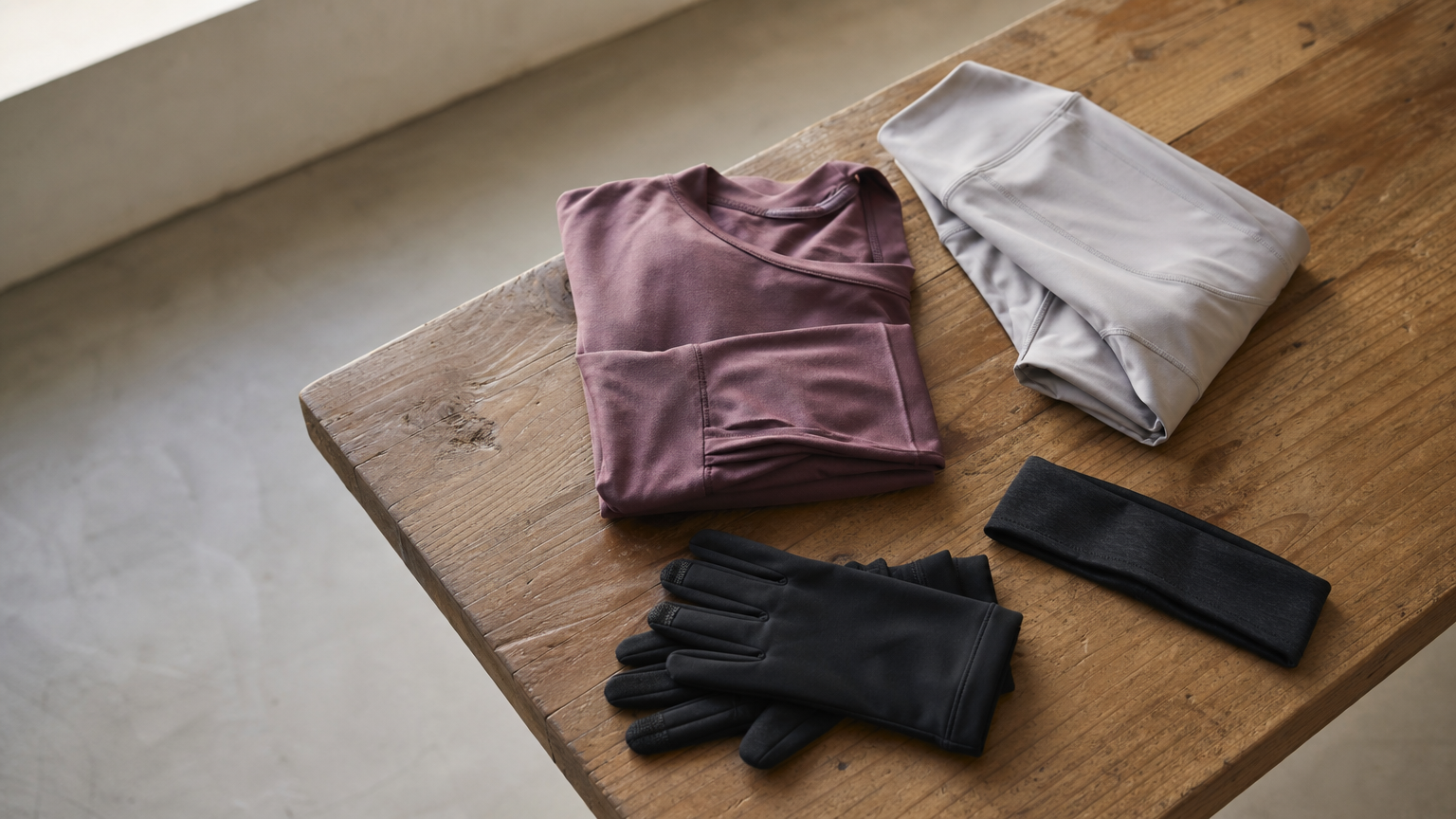
The outfit
Build the look around a long sleeve top and light tights. Add gloves, and a headband if your ears get cold.
- Long sleeve in polyester or merino, roughly 150 to 200 gsm
- Light running tights with a smooth interior, not heavy fleece
- Thin gloves, ideally touchscreen friendly
- Midweight wicking crew socks
- Optional: thin headband or cap
Why it works
Legs moving through 40°F air lose heat quickly, and tight muscles are slower to recover from it. Light tights hold in warmth without trapping sweat, and the long sleeve covers your arms, which cool faster than your legs.
At 40 to 45°F, cover your legs and hands, and keep your torso to one layer.
Hands are the first thing to complain. They sit at the far end of your circulation, so thin gloves do more for comfort than a second top ever will. If they get warm by mile three, you can stuff them in a pocket.
Best for
Pick this outfit for steady easy runs and long runs, where your effort stays moderate and your body doesn’t throw off much extra heat. It also suits early mornings and evenings, when the sun is low and the air feels sharper.
- Dry roads with light wind
- Runners who feel cold easily
- Recovery days at a slower pace
Easy swaps and add-ons
Forty degrees can feel very different depending on sun and wind. Adjust by feel, and remember that anything you add should be easy to remove mid-run.
| Condition | Swap or add-on |
|---|---|
| Hard workout or race | Short sleeve with arm sleeves instead of the long sleeve |
| Gusty, near 40°F | Packable wind vest over the long sleeve |
| Cold ears | Thin headband that pulls down to your neck |
| Light rain | Water-resistant cap and quick-dry tights |
| Dark hours | Reflective vest and a clip-on light |
4. Base layer and wind vest for 35-40°F
Once the thermometer slips under 40°F, wind becomes the real problem. This look handles it with a fitted base layer and a packable wind vest, so your core stays protected while your arms move freely.
The outfit
Wear a long sleeve base layer under a wind vest, then add tights, gloves, and a headband. Everything here peels off or tucks away easily.
- Long sleeve base layer in polyester or merino, roughly 150 to 200 gsm
- Wind vest with a mesh back panel for venting
- Light or midweight running tights
- Thin gloves and a headband
- Midweight wicking crew socks
Why it works
Wind strips heat from your chest and abdomen faster than anywhere else. A vest blocks that wind where it matters most. Your arms stay in a single layer, so they shed extra heat as your pace settles.
At 35 to 40°F, block the wind on your chest and let your arms vent.
A full jacket is too much at this range. It traps sweat around your arms, and you’ll be unzipping it by mile two. The mesh back on a good vest lets moisture escape, which keeps the base layer from going damp and cold.
Best for
Reach for this outfit on breezy mornings and steady long runs, where you start cold and finish warm. It also suits runners who overheat in jackets.
- Dry, windy days
- Runs that cross sun and shade
- Out-and-back routes, where a headwind turns into a tailwind
Easy swaps and add-ons
This is a forgiving look, so small changes cover most days. Add a thicker headband if your ears ache, and skip the vest on still, sunny days near 40°F.
| Condition | Swap or add-on |
|---|---|
| Calm and sunny | Drop the vest, keep the base layer |
| Near 35°F | Midweight gloves instead of thin ones |
| Cold ears | Headband that doubles as a neck gaiter |
| Light rain | Water-resistant vest and a brimmed cap |
| Dark hours | Vest with reflective trim or a clip-on light |
5. Thermal top, tights and headband for 30-35°F
Freezing is close, and this is where winter running outfits need real insulation. A thermal top replaces the thin base layer, and your ears finally get covered.
The outfit
Build the look around a brushed thermal long sleeve and midweight tights. Add a headband and gloves, and you’re set.
- Thermal long sleeve in polyester or merino, roughly 200 to 250 gsm
- Midweight tights with a lightly brushed interior
- Ear-covering headband
- Midweight gloves
- Midweight wicking crew socks
Why it works
At 32°F, the real threat is sweat that cools against your skin. A brushed thermal top traps a thin layer of warm air while still moving moisture outward, so you stay warm without getting soggy.
At 30 to 35°F, one good thermal layer beats two mediocre ones.
Skip the jacket. Stacking layers on your torso is the fastest way to overheat by mile three. Your ears and fingers are the weak points, so a headband and midweight gloves deliver more comfort than extra fabric on your chest.
Best for
Choose this outfit for easy runs, long runs, and group runs in dry, calm conditions. It also suits runners who feel the cold early and want a single reliable kit for most of winter.
- Weekday morning runs before sunrise
- Long runs at a conversational pace
- Cold, clear days with little wind
Easy swaps and add-ons
Thirty-two degrees with wind feels very different from 35°F in full sun. Add a vest when gusts pick up, and drop to a lighter top for hard workouts.
| Condition | Swap or add-on |
|---|---|
| Windy, near 30°F | Wind vest over the thermal top |
| Hard workout or race | Long sleeve base layer instead of the thermal |
| Very cold ears | Fleece headband or thin beanie |
| Light snow | Water-resistant tights and a brimmed cap |
| Dark hours | Reflective vest and a clip-on light |
6. Windbreaker over a base layer for 25-30°F
Below 30°F, wind does more damage than the number on your phone suggests. This is one of the most useful winter running outfits of the season because a thin shell lets you block gusts without wearing a bulky coat.
The outfit
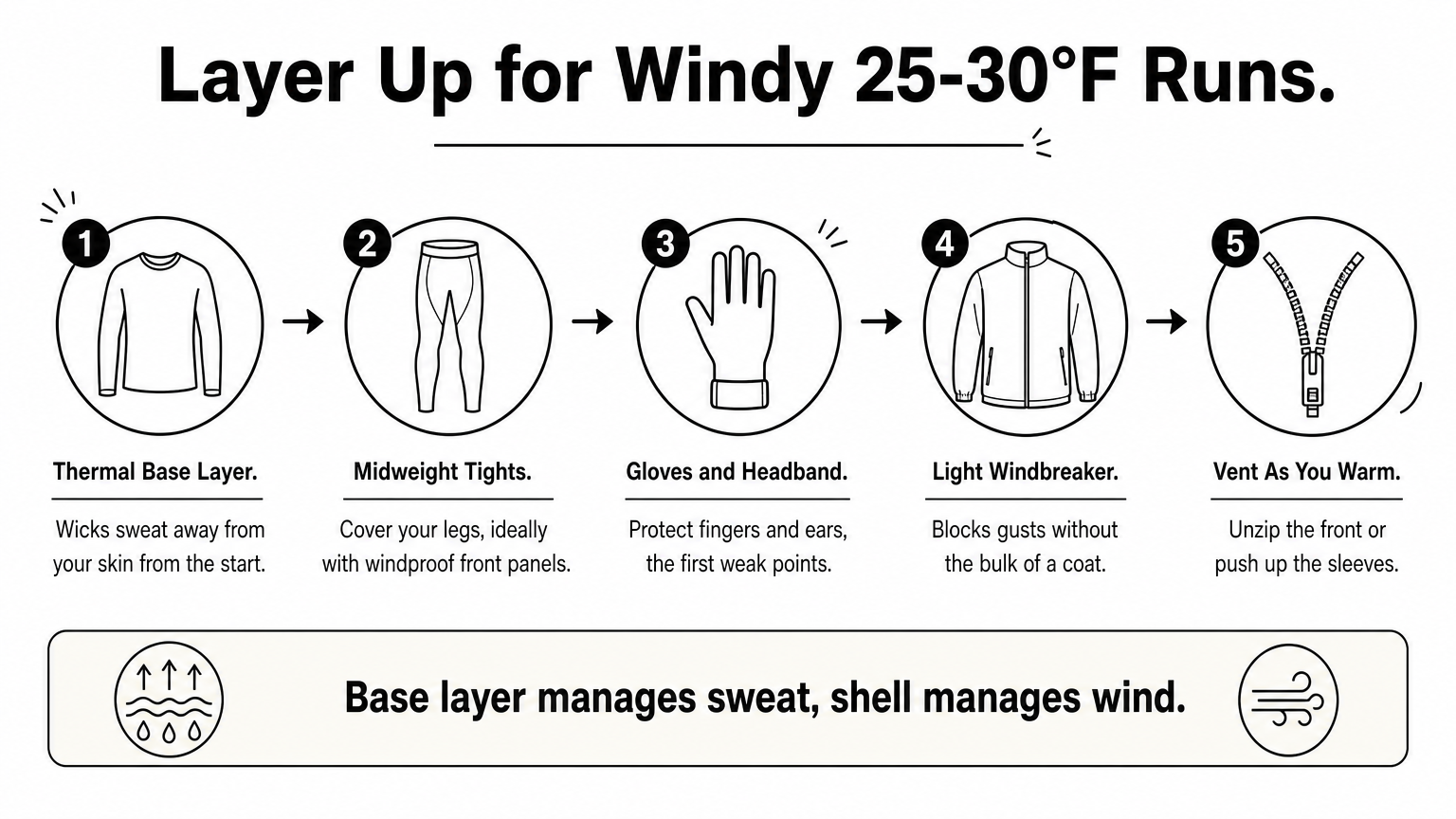
Layer a lightweight windbreaker over a thermal base layer. Then add midweight tights, gloves, and a headband that covers your ears.
- Thermal base layer, roughly 200 to 250 gsm
- Windbreaker with a full zip or underarm vents
- Midweight tights, ideally with windproof front panels
- Midweight gloves and an ear-covering headband
- Wool-blend crew socks
Why it works
A 28°F day with a 15 mph wind feels closer to 15°F on bare skin. The shell stops wind from stripping heat off your torso and arms, while the base layer underneath keeps pulling sweat away from your body.
At 25 to 30°F, let the base layer manage sweat and the shell manage wind.
Venting is what separates a good run from a clammy one. Unzip the front or push up the sleeves once your pace settles, and the shell turns into a temperature dial you can adjust without stopping. Pick a thin, breathable windbreaker, not a rain jacket, or you’ll trap steam.
Best for
Reach for this look on windy mornings, long runs, and out-and-back routes where a headwind can show up halfway through. It also suits runners who get chilled during slow miles.
- Exposed roads, bridges, and open trails
- Easy runs where your effort stays low
- Cold mornings with strong gusts
Easy swaps and add-ons
This outfit has room to flex. Swap the shell for a vest on calm days, and tie the windbreaker around your waist if you overheat on a hard workout.
| Condition | Swap or add-on |
|---|---|
| Calm, sunny | Wind vest instead of the windbreaker |
| Near 25°F | Fleece headband or thin beanie |
| Light snow | Water-resistant shell and brimmed cap |
| Cold neck | Neck gaiter you can pull up over your chin |
| Dark hours | Shell with reflective trim and a clip-on light |
7. Fleece-lined tights and a beanie for 20-25°F
Frozen air makes thin tights feel like nothing. At 20 to 25°F, this look adds fleece-lined tights and a beanie to the thermal top you already know, and it is the point where your legs and head need real help.
The outfit
Build from the bottom up. Put on the tights first, then your thermal top, and finish with a beanie, gloves, and a gaiter.
- Fleece-lined or heavily brushed thermal tights
- Thermal long sleeve, roughly 250 gsm, with a light shell if it’s windy
- Thin fleece or wool beanie that covers your ears
- Midweight gloves, or lobster mitts if your hands run cold
- Neck gaiter
- Wool-blend crew socks
Why it works
Your legs swing through the wind with every stride, and the fleece lining traps a layer of warm air against your skin. Thin tights can’t do that, so your quads and calves stay stiff for the first mile.
At 20 to 25°F, put your insulation on your legs and head, and keep your torso simple.
Your head is the other weak spot. A beanie holds in heat and covers your ears, which are the first to ache. Choose a thin one, because a thick hat gets soggy by mile three. You can also pull it off and tuck it in a pocket once you warm up.
Best for
Wear this outfit for easy runs, long runs, and group runs where your pace stays steady. It also suits anyone who finishes a cold run with numb thighs or aching ears.
- Early mornings before the sun climbs
- Dry roads with a light breeze
- Slow miles where your body makes less heat
Easy swaps and add-ons
Twenty-two degrees in sun feels nothing like 22°F at dusk. Adjust the top half first, since your legs and head are already covered.
| Condition | Swap or add-on |
|---|---|
| Windy | Windbreaker over the thermal top |
| Hard workout | Thin headband instead of the beanie |
| Very cold hands | Mitts with a thin liner glove inside |
| Light snow | Water-resistant tights and a brimmed cap under the beanie |
| Dark hours | Reflective vest and a clip-on light |
8. Merino base and insulated jacket for 10-20°F
Teens are where winter running outfits stop being about comfort and start being about safety. Damp skin chills fast in this range, so you need a merino base that manages sweat and an insulated jacket that holds heat.
The outfit
Build around a merino long sleeve and add a light insulated jacket on top. Fleece-lined tights, a beanie, and warm hand coverings finish the look.
- Merino long sleeve, roughly 200 to 260 gsm
- Light insulated jacket with synthetic fill and stretch panels
- Fleece-lined tights
- Beanie and neck gaiter
- Lobster mitts or insulated gloves
- Wool running socks
Why it works
Merino keeps insulating when it gets damp and stays fresh over back-to-back cold days. Synthetic fill in the jacket does the same, while down collapses once your sweat soaks in.
At 10 to 20°F, merino manages the moisture and the jacket holds the heat.
Fit matters too. Choose a jacket slim enough to move in, and unzip the front the moment you feel warm. Sweat that freezes inside your layers is the real danger at this temperature.
Best for
Pick this outfit for easy runs and long runs at a conversational pace, when your body makes less heat. It also suits anyone who stays cold through the first two miles.
- Pre-dawn runs in deep winter
- Slow recovery miles
- Snowy paths where your pace drops
Easy swaps and add-ons
Hard efforts change the math. Swap the jacket for a windbreaker on workout days, and add a second pair of socks only if your shoes have room. Tight shoes cut circulation and make feet colder.
| Condition | Swap or add-on |
|---|---|
| Hard workout | Windbreaker over the merino instead of the jacket |
| Near 10°F | Thin liner gloves under your mitts |
| Strong wind | Balaclava or gaiter pulled over your nose |
| Snow or ice | Trail shoes or traction cleats |
| Dark hours | Jacket with reflective trim and a clip-on light |
9. Double-layered bottoms and mittens for 0-10°F
Single digits change the job of your outfit. At this range, winter running outfits are about protecting skin and keeping your legs loose, so you double up on the bottoms and swap gloves for mittens.
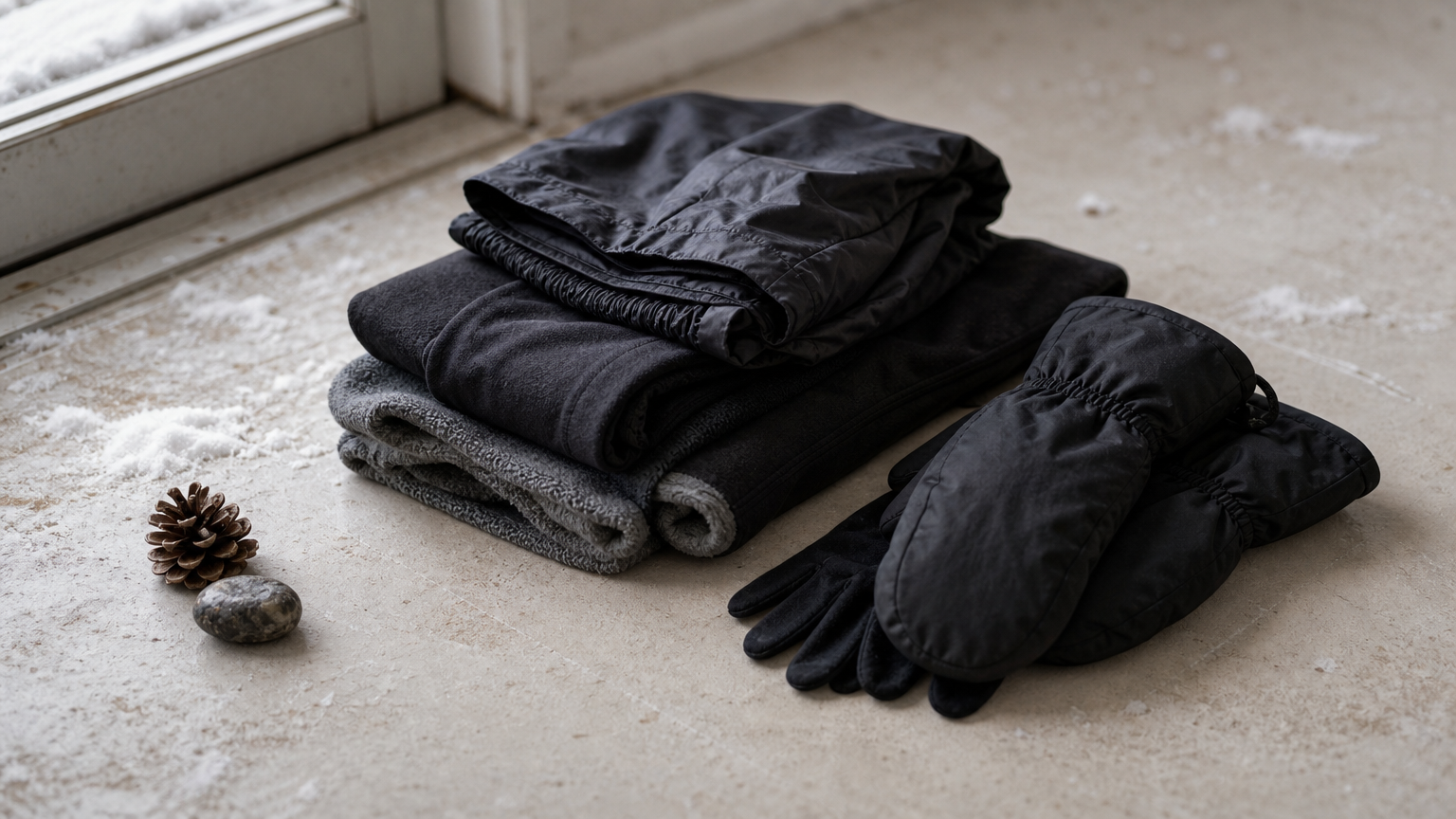
The outfit
Start with fleece-lined tights, then pull wind pants over them. Keep your top half close to the last look: a merino base under a light insulated jacket.
- Fleece-lined tights as the base layer
- Lightweight wind pants with ankle zips
- Merino long sleeve and a light insulated jacket
- Lobster mitts or mittens over thin liner gloves
- Beanie and a balaclava or neck gaiter
- Wool running socks
Why it works
Two thin layers trap warm air between them, and the outer shell stops wind from cutting through the tights. Your thighs and calves do the hardest work, so they lose heat fastest in a headwind.
At 0 to 10°F, two thin layers on your legs beat one thick one.
Mittens beat gloves because your fingers share warmth in one pocket. Add a liner glove so you can pull a mitt off to use your phone or a key without exposing bare skin for long.
Best for
Wear this look for easy runs and long runs at a steady pace, especially when your body is not producing much extra heat. It also suits runners on open, windy routes.
- Pre-dawn runs in deep winter
- Out-and-back routes with a stiff headwind
- Runners who finish cold runs with numb thighs
Easy swaps and add-ons
Zip-off or vented wind pants make this look easy to tune. Pull the pants off if you warm up on a hard effort, and cover your cheeks and nose whenever the wind picks up, since exposed skin is where frostbite starts.
| Condition | Swap or add-on |
|---|---|
| Hard workout | Skip the wind pants, wear one pair of thermal tights |
| Strong wind | Balaclava pulled over your nose and cheeks |
| Icy paths | Traction cleats over your shoes |
| Cold feet | Shoes half a size up, so thick socks do not squeeze |
| Dark hours | Reflective vest and a clip-on light |
10. Full-coverage subzero look for below 0°F
Below zero, you are no longer picking a look. You are building a system. The rule for winter running outfits at this range is simple: leave no exposed skin, and keep your route short enough to bail out of.
The outfit
Stack three layers on top and two on the bottom, then seal every gap at your wrists, neck, and face.
- Merino long sleeve base, roughly 200 to 260 gsm
- Thermal fleece mid-layer
- Insulated jacket or windproof shell
- Fleece-lined tights under wind pants
- Balaclava under a beanie
- Mittens over thin liner gloves
- Sunglasses or clear goggles
- Heavy wool socks and shoes half a size up
- Traction cleats for packed snow and ice
Why it works
Wind chill is the real threat here, not the number on the thermometer. Frostbite can set in within about 30 minutes on exposed skin when wind chill falls near -20°F. The balaclava and goggles close the last gaps, and the mid-layer gives you a vent you can unzip the moment sweat starts to build.
Below 0°F, cover every inch of skin and keep the route short.
Three thin layers also beat one bulky coat. Trapped air between them insulates, and you can shed one if you overheat. Frozen sweat inside your clothes does more harm than the cold itself.
Best for
Choose this look for short, easy runs of 30 to 45 minutes if you already have cold-weather experience. Run loops near home instead of one far-flung route, so you are never more than a few minutes from a warm door.
- Easy recovery miles, not hard workouts
- Experienced winter runners with a backup plan
- Dry, clear days with traction underfoot
Easy swaps and add-ons
Plan your adjustments before you leave. Cold fingers and a numb face are your cue to turn around. If the wind chill is brutal, a treadmill session is a smart call, not a failure.
| Condition | Swap or add-on |
|---|---|
| Strong wind | Face tape or balm on cheeks and nose |
| Very cold hands | Chemical hand warmers inside your mittens |
| Foggy goggles | Sunglasses with a vented balaclava |
| Long run | Loop route with a stashed dry top and hat |
| Dark hours | Reflective vest and a clip-on light |
11. How to adjust any look for wind, rain and snow
Your 10 looks assume dry, calm air. Real winter rarely cooperates, so treat this section as a patch you can apply to any look above when you’re deciding what to wear for running in cold weather that isn’t perfect.
The outfit
Pick the look for your temperature, then add one weather piece. Keep the base layer the same. Wind gets a shell or vest, rain gets a brimmed cap, and snow gets traction for your shoes.
- Wind: windbreaker or vest, plus a gaiter for your face
- Rain: water-resistant shell with vents, brimmed cap, quick-dry tights
- Snow: trail shoes or cleats, dark or bright layers so drivers see you
Why it works
Moving air and wet skin pull heat off your body much faster than still, dry air. A 30°F day with a 20 mph wind feels like about 17°F, according to the National Weather Service wind chill chart. Plan for the feels-like number, not the one on your phone’s home screen.
Dress for the wind chill and the wetness, not the number on the thermometer.
Rain adds a different problem. A fully waterproof jacket traps steam, so you end up soaked from the inside anyway. A water-resistant, vented shell sheds light rain and lets sweat escape, which is why it beats a rain coat on most runs.
Best for
Reach for these patches whenever the forecast shows gusts above 10 mph, precipitation, or fresh snow on your route. They also help on exposed stretches like bridges and open trails, where conditions change halfway through your loop.
- Out-and-back routes with a headwind on the way out
- Wet mornings when you can’t skip the run
- Snowy paths where your pace drops and you make less heat
Easy swaps and add-ons
Start with one change, then add another only if you still feel exposed. Frozen sweat and soaked socks cause more misery than a single cold finger.
| Condition | Swap or add-on |
|---|---|
| Headwind | Vest or shell, gaiter over your chin |
| Steady rain | Brimmed cap, water-resistant shell, spare dry socks in the car |
| Wet snow | Water-resistant tights, wool socks, mitts over liner gloves |
| Packed snow or ice | Traction cleats, shorter stride |
| Low light | Reflective vest and a clip-on light |
Dress for mile two, not mile zero
Every look above comes down to one idea. Dress for the run you will be having at mile two, not the chill you feel standing at the door. Start a little cold, keep your base layer dry, and let a vest, shell, or mittens handle wind and numb fingers. The best winter running outfits are the ones you can adjust without stopping.
Pick your temperature range, wear that look once, and note what you would change. Most runners need two or three weeks to learn their own thresholds. After that, getting dressed gets easy, and cold mornings stop being a negotiation.
Want more practical style guides like this one? Browse the Boulevard Insight fashion and travel guides for seasonal outfit ideas, trend reports, and packing tips you can use right away.