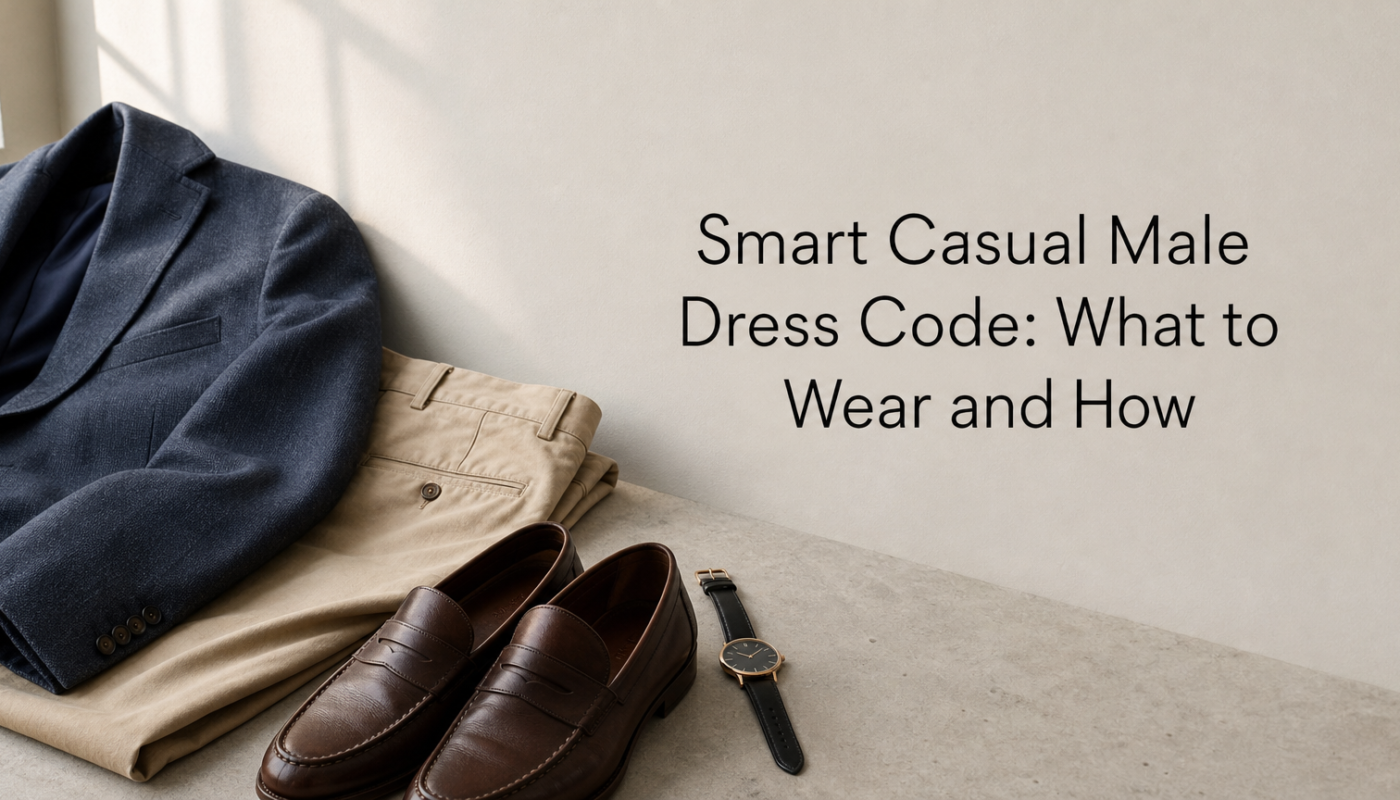
You got the invite and it says "smart casual." Now you’re standing in front of your closet wondering if jeans are okay or if you need a full suit. You’re not alone. The smart casual male dress code confuses more guys than almost any other dress code, because it sits in that gray zone between office wear and weekend clothes.
Here’s the short answer: smart casual means polished, put-together pieces without a full suit or tie. Think a blazer over a quality shirt, tailored chinos or dark denim, and leather shoes instead of sneakers. It’s less rigid than business casual but still requires effort, and getting it wrong in either direction (too dressy or too sloppy) stands out immediately.
In this guide, you’ll get a clear breakdown of what a men’s smart casual dress code actually includes, item by item. We’ll cover shirts, jackets, trousers, and shoes, plus a few combinations that work for dinner, work events, and weddings alike. By the end, you’ll know exactly what to pull off the hanger next time that invite lands in your inbox.
Why the smart casual dress code matters
Getting dressed for a smart casual event isn’t just about following rules for the sake of it. Restaurants, weddings, and workplaces use this dress code because it signals a specific level of effort without demanding a full suit. Show up underdressed and you look like you didn’t take the invite seriously. Show up overdressed and you look stiff, like you missed the memo that this isn’t a black-tie affair. The smart casual dress code male guests are expected to hit sits right in the middle, and nailing that middle ground says you understand the room.
A smart casual outfit tells people you respect the occasion without trying too hard to impress it.
Venues and event hosts pick this dress code specifically because it’s flexible enough to work across different settings. A rooftop dinner, a client meeting after hours, a wedding reception, a gallery opening: all of these might land under smart casual because it photographs well, feels comfortable, and doesn’t require anyone to rent a tuxedo. That flexibility is exactly why so many men get it wrong. Without a strict uniform to follow, you’re left making judgment calls, and one bad call (cargo shorts, a graphic tee, sneakers with visible logos) can throw off the whole look.
Where you’ll actually run into it
Knowing when smart casual applies helps you plan ahead instead of scrambling the morning of the event. You’ll typically see this dress code requested for:
- Wedding receptions and rehearsal dinners
- Work happy hours, holiday parties, and client dinners
- Nice restaurants that don’t require a jacket but expect more than jeans and a hoodie
- Networking events, industry mixers, and some job interviews
- Date nights at upscale venues
Hosts choose this code because it removes the guesswork of "formal" while still setting a baseline. Nobody wants a room split between guys in full suits and guys in gym shorts, and smart casual closes that gap.
Smart casual vs. other dress codes
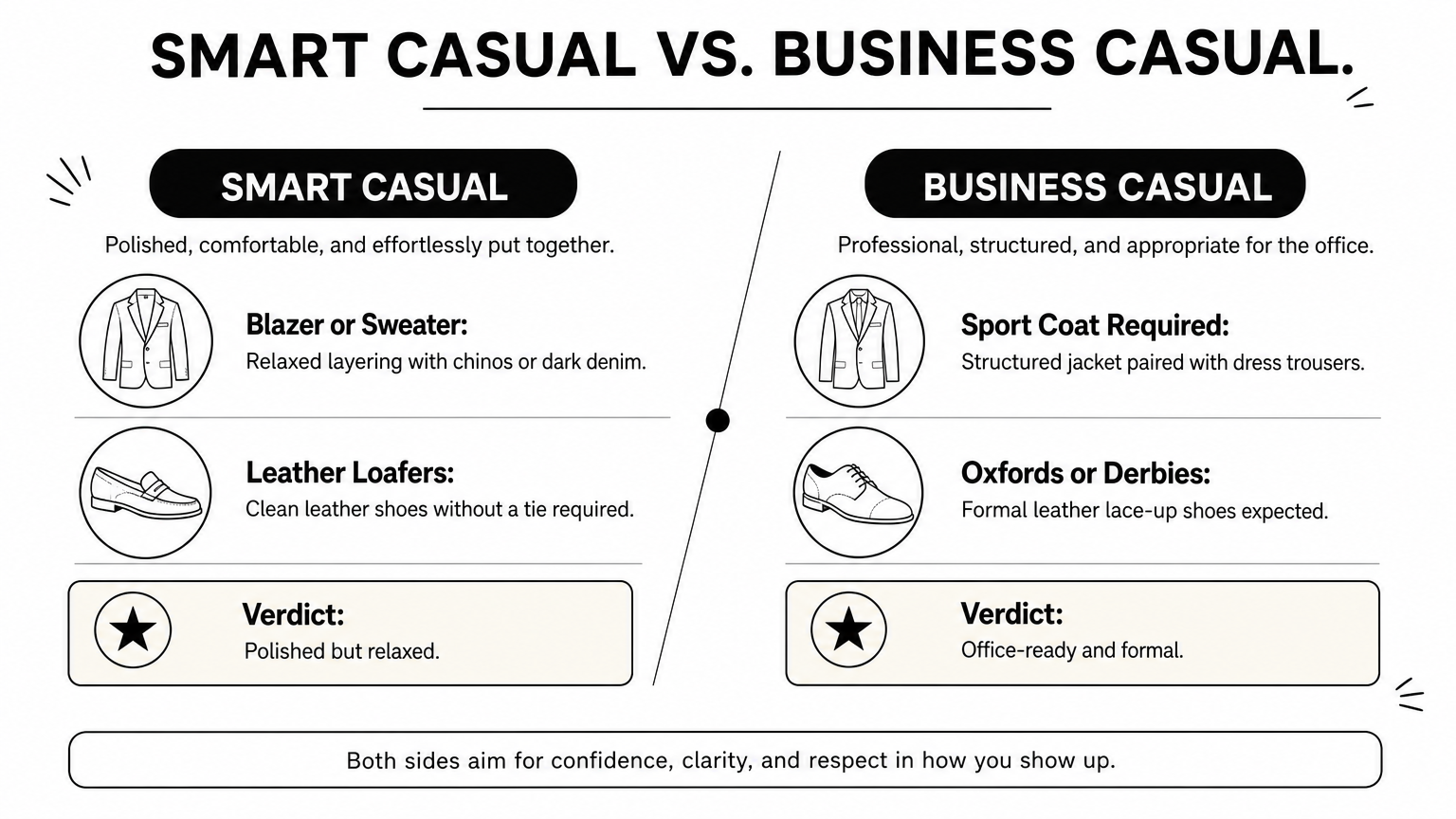
Comparing dress codes side by side makes the differences click faster than any written explanation. Here’s how smart casual stacks up against the codes you’re most likely to confuse it with:
| Dress code | Top | Bottom | Shoes |
|---|---|---|---|
| Casual | T-shirt, polo | Jeans, shorts | Sneakers, sandals |
| Smart casual | Button-down, quality knit, blazer | Chinos, dark denim | Leather loafers, clean sneakers |
| Business casual | Dress shirt, sport coat | Dress trousers | Oxfords, derbies |
| Formal / black tie | Tuxedo shirt | Tuxedo trousers | Patent leather shoes |
Men frequently overshoot into business casual territory, or undershoot into plain casual, because those two codes feel more familiar. A smart casual dress code for male attendees means picking pieces from the middle column: elevated enough to look intentional, relaxed enough that you’re not mistaken for the wedding planner.
What getting it wrong actually costs you
Underestimating this dress code has real consequences beyond just feeling awkward in photos. Turning up underdressed to a work function can make you look like you’re not taking your career seriously, especially in front of clients or leadership. Overdressing, meanwhile, can make you seem out of touch or trying too hard, which carries its own social cost. Either mistake pulls focus away from you and onto your outfit, which is the opposite of what good style is supposed to do. Getting the male smart casual dress code right lets your clothes support the moment instead of becoming the story people remember about it.
How to build a smart casular outfit

Building a smart casual guys dress code outfit works best when you think in layers instead of trying to nail one perfect item. Start with a base layer that’s neat but not stiff, add a mid-layer for polish, and finish with shoes that ground the whole thing. Skip any single piece from that formula and the outfit either reads too casual or too formal, which is exactly the trap most guys fall into.
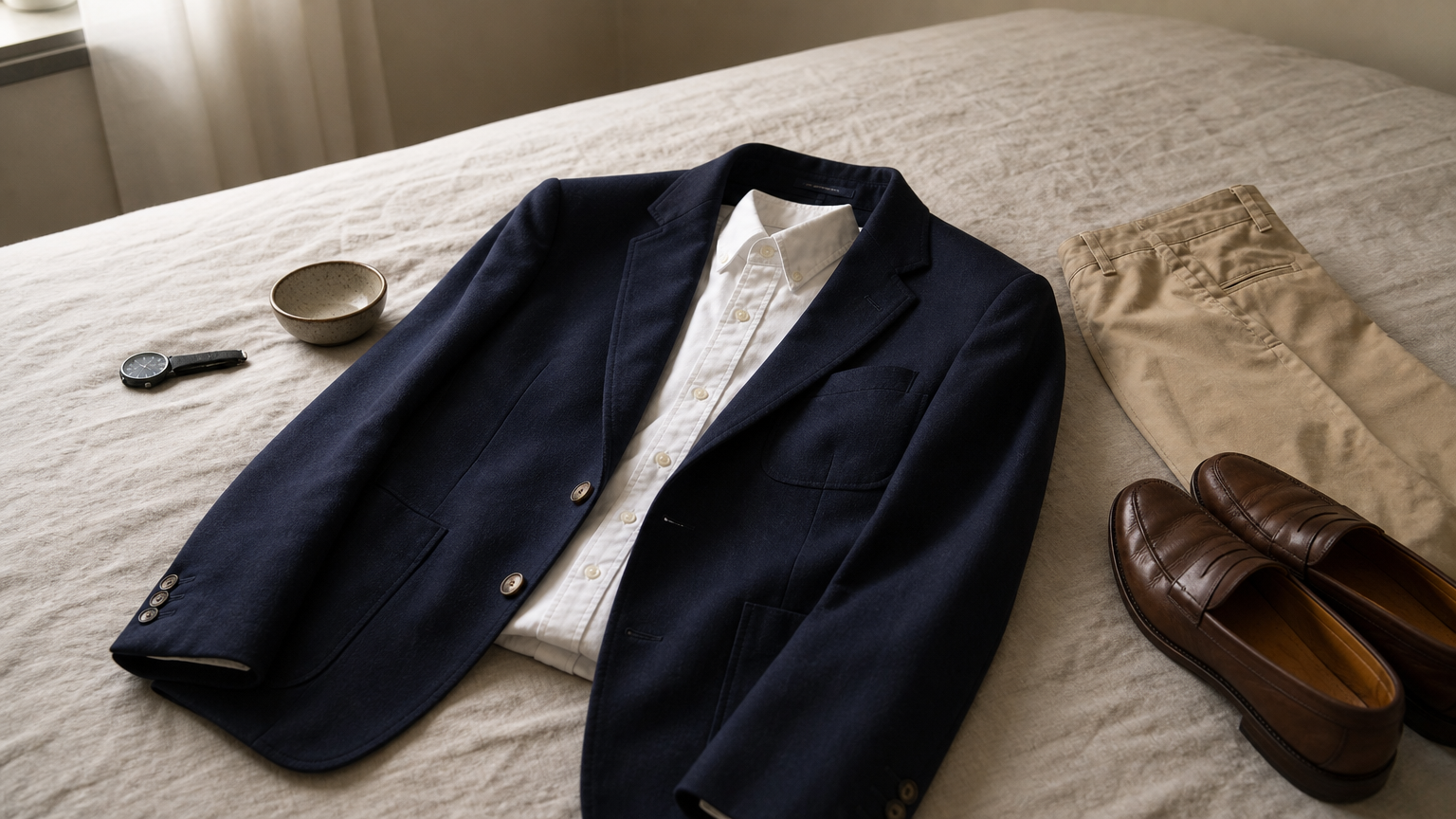
The easiest way to nail smart casual is to treat it as three decisions: top, bottom, shoes, and get each one right on its own.
Layer from the top down
Anchor your outfit with a quality button-down shirt in a solid color or subtle pattern, then add a blazer, unstructured sport coat, or a clean crewneck sweater over it. Oxford cloth, chambray, and lightweight flannel all work depending on the season. A blazer instantly signals effort, but you don’t need to button it or wear it with a tie. If the venue skews more relaxed, a merino sweater over a collared shirt hits the same note without feeling like office wear.
Pick bottoms that bridge dressy and casual
Chinos are the safest bet for a smart casual dress code male situation, especially in navy, olive, or stone. Dark, unwashed denim without rips or fading also works at most venues, though it’s worth checking the invite twice for weddings. Avoid anything with a visible logo, distressing, or a baggy fit; the goal is a clean, tapered silhouette that pairs well with a blazer.
Finish with the right shoes and accessories
Shoes and small details decide whether the outfit reads polished or half-finished. Use this list as your final check before you leave the house:
- Leather loafers, derbies, or minimalist leather sneakers (no athletic branding)
- A leather belt that matches your shoe color
- A simple watch instead of a sport tracker
- Socks that match your trousers, not your shoes
Our guide to building a versatile menswear wardrobe breaks down more combinations if you want to build a rotation beyond one outfit, and this breakdown of how to wear a smart casual code dress covers the rules behind it.
Smart casual outfit examples for men
Seeing the formula in action makes it easier to apply than reading rules alone. Below are three real-world scenarios where a men’s smart casual dress code applies, along with the specific pieces that work for each one. Use these as starting points, then swap in colors and textures that fit your own wardrobe.
Dinner at an upscale restaurant
Picture a navy blazer over a white oxford shirt, no tie, paired with charcoal chinos and brown leather loafers. Add a slim leather belt and a plain watch, and you’re dressed for a reservation without looking like you’re headed to the office. This combination reads polished under restaurant lighting and photographs well if the night ends up on someone’s camera roll.
Work happy hour or client dinner
Swap the blazer for a fine-gauge merino sweater in a neutral tone, layered over a light blue button-down with the collar showing. Keep the chinos but go with dark denim if the venue leans more relaxed than the office. Finish with clean derbies or minimalist leather sneakers, since sneakers signal you clocked out of work mode without looking underdressed for colleagues who might still be there.
Nail one solid outfit for each occasion type, and you’ll never scramble through your closet again.
Wedding guest or reception
A smart casual dress code male wedding guest is often expected to look sharper than a Tuesday dinner but still stop short of a full suit. Go with a lightweight sport coat in a subtle pattern, a crisp shirt underneath, and dress trousers instead of chinos. Loafers or clean derbies finish the look, and a pocket square adds polish without pushing into formalwear territory; for colder months, see these effortless winter wedding guest outfits.
| Occasion | Top | Bottom | Shoes |
|---|---|---|---|
| Upscale dinner | Blazer + oxford shirt | Charcoal chinos | Brown loafers |
| Work happy hour | Sweater + button-down | Dark denim | Derbies or clean sneakers |
| Wedding reception | Sport coat + dress shirt | Dress trousers | Loafers or derbies |
Notice how each example uses the same three-layer formula from the last section, just recombined for the setting. Once you build two or three go-to combinations like these, dressing for the next invite becomes a matter of matching the venue to the outfit you already know works, not starting from scratch every time.
Common smart casual mistakes to avoid
Even guys who understand the theory still trip on execution, and the same handful of mistakes show up again and again. Most of these errors come from treating smart casual like a stricter version of casual instead of a relaxed version of business dress. Knowing what to avoid is often more useful than knowing what to wear, since one wrong piece can undo an otherwise solid outfit.
Overdressing into full business mode
Slipping into a full suit and tie is the most common overcorrection, especially for guys who default to office wear whenever they’re unsure. A smart casual dress code for male guests never calls for a tie, a matching suit, or dress shoes shined to a mirror finish. That level of formality reads as anxious rather than confident, and it can make you look like you didn’t read the invite closely.
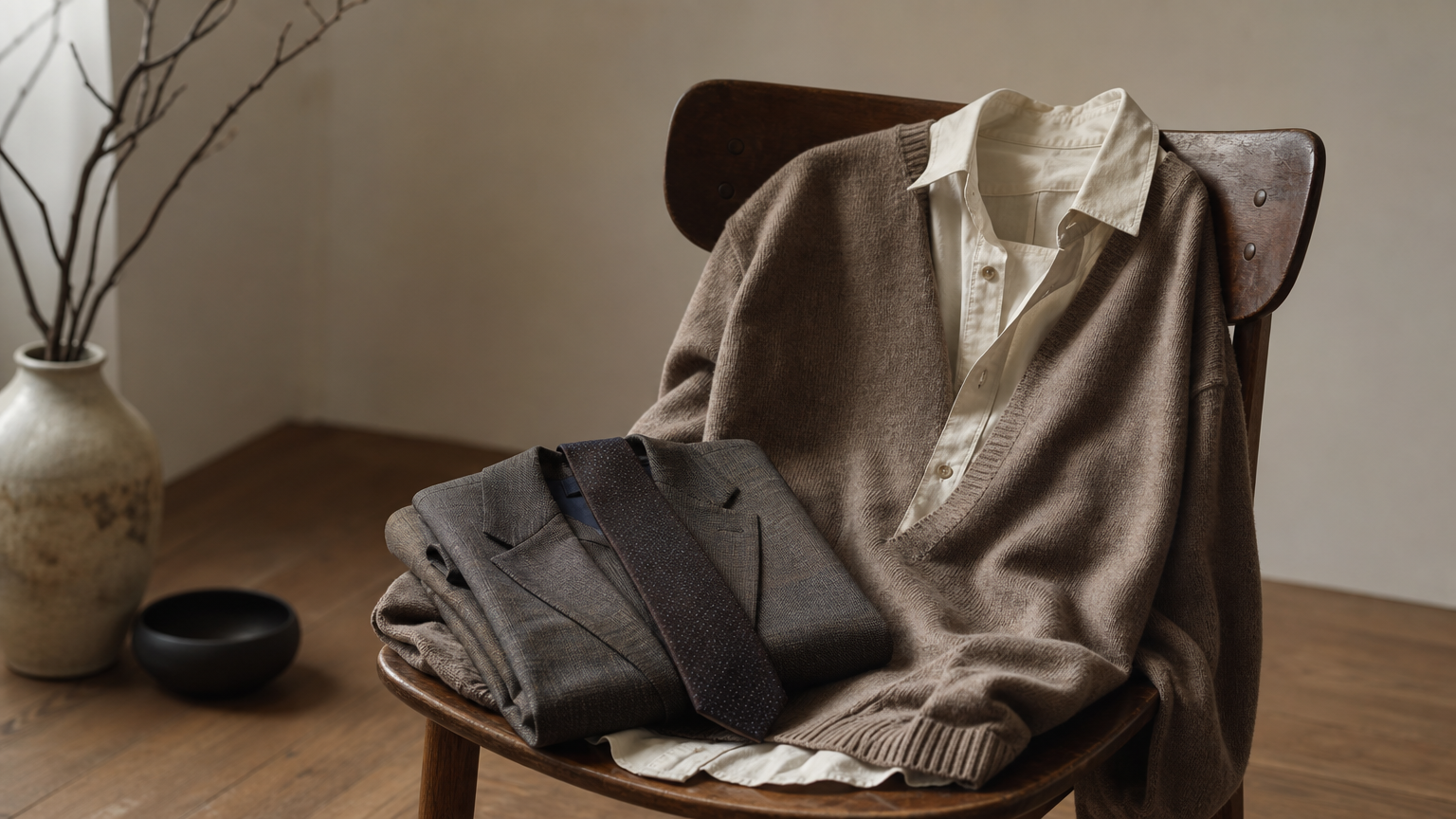
When in doubt, remove one formal element rather than adding one.
Undershooting into weekend casual
Undershooting is just as common, and it usually comes from packing for comfort instead of the occasion. Watch out for these giveaways that signal you skipped the effort:
- Graphic tees or logo-heavy shirts
- Athletic sneakers with visible branding
- Cargo shorts or gym joggers
- Baseball caps indoors
- Wrinkled or untucked shirts with no structure at all
Any one of these can flag you as underdressed even if the rest of the outfit is on point, so treat this list as your last check before heading out.
Fit and fabric slip-ups
Fit ruins more outfits than fabric choice ever does, and it’s the detail most guys overlook entirely. Trousers pooling over your shoes or a blazer stretched tight across the shoulders undercuts even the right pieces. Sizing chinos and shirts to your actual body, not the size you wore five years ago, matters more than the price tag on any single item.
Fabric mismatches trip people up too, particularly mixing overly casual textures like fleece or mesh with dressier pieces like a blazer. Stick to natural fabrics such as cotton, wool blends, and linen, and the whole outfit will hang together instead of looking cobbled from two different closets.
Dressing smart casual with confidence
Once you know the formula, the smart casual male dress code stops feeling like a puzzle. Layer a quality shirt with a blazer or sweater, choose chinos or dark denim over anything logo-heavy, and finish with leather shoes instead of sneakers. Confidence comes from repetition, not luck. Build two or three outfits that follow this structure, and you’ll never stare into your closet wondering what an invite actually means.
Smart casual rewards guys who plan ahead rather than guess the morning of the event. Treat every dress code as a formula, not a mystery, and you’ll walk into any dinner, wedding, or work function already dressed right. For more outfit breakdowns and styling advice you can actually use, browse the latest fashion guides on Boulevard Insight.